India’s Gen Z protest movement won a rare victory with Dharmendra Pradhan’s resignation, but students say the bigger fight over jobs and accountability is just starting.
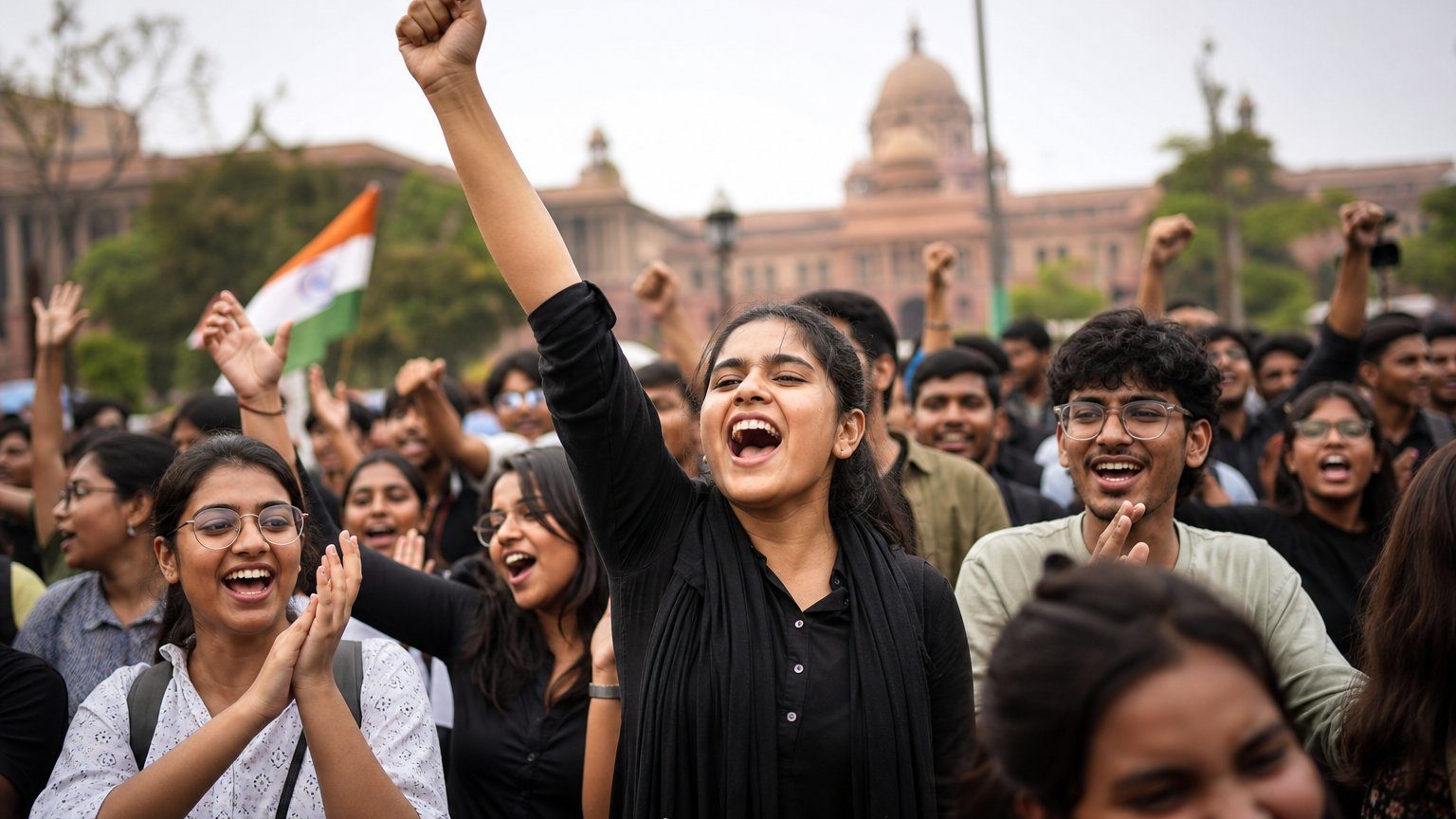
India’s Gen Z protest movement scored a rare win this week after education minister Dharmendra Pradhan resigned, following more than a week of mounting street demonstrations that spread across the country. For many young Indians, the fallout from the education protest was about more than one minister. It became a public test of whether pressure from students and young workers could force the government to bend.
That sense of victory was immediate in Delhi and online. Sakhi, a 22-year-old student activist, said the resignation made it feel, for the first time, that protests could produce results. Social media users quickly resurfaced an old video of a senior Modi minister saying resignations do not happen in the government, a line that only sharpened the mood among protesters. Sakhi said the movement drew strength from Instagram, where activists shared videos of police detentions, assaults, and mocking clips that spread to millions of viewers.
The latest unrest began in May after India’s NEET medical entrance exam was cancelled because of a question paper leak, forcing nearly two million students to sit the test again. The scandal triggered outrage among families, especially after more than 20 students died by suicide, with relatives blaming the episode. From there, the anger was taken up by the satirical Cockroach Janta Party, an online campaign created after India’s chief justice compared unemployed people with “fake and bogus degrees” to cockroaches. Its founders held a sit-in in Delhi and called for Pradhan’s resignation, education reforms, and compensation for bereaved families.
At first, the protests barely registered. That changed on 18 July, when Delhi police forcibly removed educator Sonam Wangchuk during a hunger strike and hospitalised him. Two days later, tens of thousands marched toward parliament at the campaign’s call, and police responded with baton charges, tear gas, and pellet guns. Videos of the crackdown raced through social media and, instead of stopping the unrest, helped deepen it. Sakhi said the government misread the movement because it had a grip on mainstream media, Facebook, and WhatsApp, but missed what was happening on Instagram.
“India’s Gen Z protest movement won a rare victory with Dharmendra Pradhan’s resignation, but students say the bigger fight over jobs and accountability is just starting.”
The movement has since widened beyond one issue or one city. Somaya Korde, a 26-year-old activist from Mumbai, said she was detained at home after urging people online to join a 20 July protest, yet still attended multiple demonstrations afterward. She called Pradhan’s resignation “not the end, but just the beginning,” and said young people were only starting to speak openly about bigger problems. Korde, the first woman in her family to graduate in law and a recent civic election candidate, said education was supposed to be her path forward, but the NEET leak shattered her faith in a system that promised merit and reward.
Other young protesters voiced the same frustration. Korde pointed to privatized schools and colleges, repeated paper leaks, and a job market that does not absorb graduates. Government data shows unemployment among Indians ages 15 to 29 rose to 16.2 percent in June from 13.8 percent a year earlier. A 2026 Azim Premji University study found fewer than seven percent of jobseekers got permanent salaried work within a year, and fewer than four percent landed white-collar jobs. For many in this generation, the education protest has become a broader complaint about accountability, opportunity, and the gap between promises and reality.
The anger has also carried a personal edge. Eighteen-year-old Harshvardhan Kadam, who began selling laptops part-time after school to support his mother after his father died last year, filmed a protest in Mumbai that later went viral. In the video, viewed 10 million times, a policeman is seen threatening to frame him in a fake drugs case while detaining him in a police van. The constable has since been suspended. Kadam said he never wanted the officer punished; he wanted people to see how police treated peaceful protesters.
Not everyone feels safe enough to celebrate. Varuni Poorva, a 30-year-old aspiring professor in Patna and longtime student activist, said the resignation showed the government could be forced back, but she feared a crackdown anyway. Police have charged more than 100 protesters with offenses including attempted murder and arrested more than 40, even as the government pledged not to act against those who organized or joined the demonstrations. Human Rights Watch has said Indian authorities under Modi have routinely prosecuted activists, journalists, and peaceful protesters under fabricated counterterrorism and hate speech laws. For American readers, the lesson is straightforward: when young people lose faith in education, jobs, and fair treatment, unrest can move fast—and governments that ignore that warning may face a louder challenge next time.
Frequently asked questions
Why did the protests start in the first place?
They began in May after India’s NEET medical entrance exam was cancelled because of a question paper leak, forcing nearly two million students to retake it. The scandal angered families, especially after more than 20 students died by suicide.
What did protesters want besides Pradhan’s resignation?
The online campaign called for education reforms and compensation for bereaved families. Many protesters also said the issue reflected larger problems like unemployment, privatized education, and lack of accountability.
How did the protests spread so widely?
Activists used Instagram to share videos of detentions, assaults, and police crackdowns, which reached millions of viewers. After police removed Sonam Wangchuk and later used force against marchers, the unrest grew further.
Did the resignation end the protest movement?
No. Several activists said the resignation was only a beginning, not an end, because broader complaints about the education system, jobs, and police treatment remain unresolved.
We value your privacy 🍪We use cookies for essential features and, if you allow it, to send you a notification whenever we publish a new story. See our Privacy Policy.
📨
Never Miss a Story
Get the headlines that matter delivered straight to your inbox.
📱 On iPhone: tap the Share icon, choose “Add to Home Screen”, then open TheTrueDefender from your Home Screen and tap 🔔 to turn on notifications. (Apple only allows notifications for saved web apps.)
📱 Add TheTrueDefender to your home screen for one-tap access.