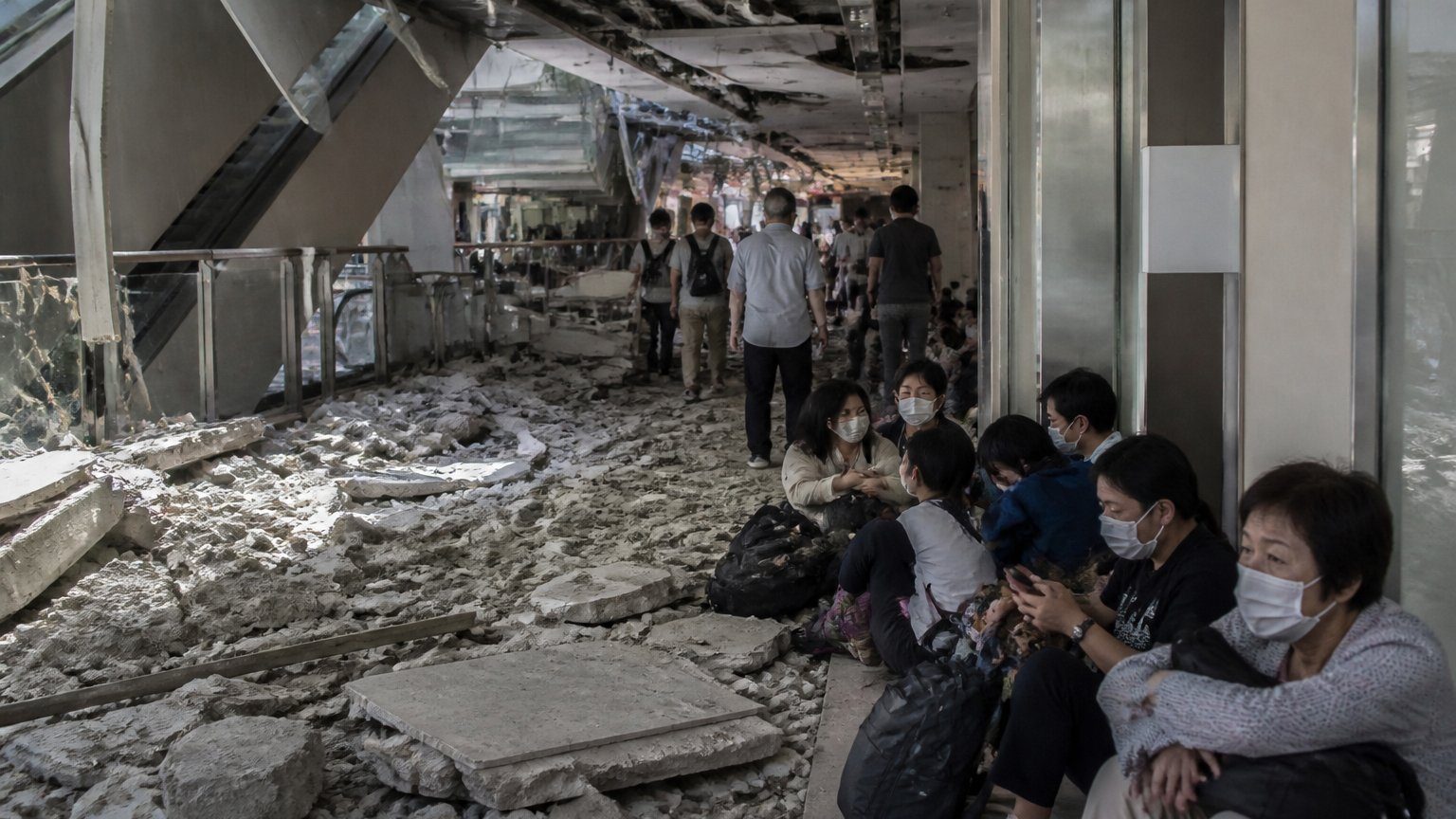
Japan earthquake rescue crews are searching a damaged Kumamoto mall after a strong quake killed 13, toppled part of a second floor, and triggered evacuations.
A Japan earthquake has killed 13 people in south-west Japan, with rescuers working through the wreckage of a damaged shopping mall in Kumamoto prefecture after part of the building collapsed. Officials said the quake hit late on Tuesday and sent people running from damaged roads, buildings, and rail lines as thousands were moved into shelters.
Three of the deaths were reported at the Aeon Mall in Kashima, where the fire department said a section of the second floor gave way. Eight people have been pulled from the mall, and local reports said the number still trapped is lower than early estimates of 20 to 30. Footage from the site showed smoke rising from the building, shoppers fleeing into the car park, and large sections of the exterior stripped away to expose steel beams.
Prime Minister Sanae Takaichi offered condolences to those killed and praised emergency crews for their work. She said the response was a race against time and said 3,600 soldiers would be sent to support disaster recovery as tremors continued. Japan’s self-defence force, fire services, and coast guard have all been deployed, according to Chief Cabinet Secretary Minoru Kihara, who urged people in hard-hit areas to follow evacuation instructions from local authorities and stay calm.
The quake was measured at 7.1 by the Japan Meteorological Agency, while the US Geological Survey later rated it at 6.8. The shaking was shallow, with an epicentre about 20 kilometres south of Kumamoto city and a depth of 10 kilometres. Aftershocks have continued, with the meteorological agency reporting more than 60, ranging in magnitude from 1 to 4.
“Japan earthquake rescue crews are searching a damaged Kumamoto mall after a strong quake killed 13, toppled part of a second floor, and triggered evacuations.”
Damage was not confined to the mall. Broadcast images showed cracked roads and bridges, several buildings on fire, and suspended train service. Electricity was cut off for thousands of homes, adding to the pressure on people already forced from their houses and into shelters. In nearby Kagoshima, a German photography student described hearing glass break and said the building felt as if it had turned to liquid beneath him during the shaking.
The Japan earthquake also raised concerns because of the region’s long experience with seismic disasters. Japan sees about 1,500 quakes a year, and Kumamoto has been hit hard before. NHK reported that 278 people were killed in a series of powerful earthquakes there in 2016, a grim reminder of how quickly a familiar risk can become a deadly emergency.
International officials said the Sendai Nuclear Power Plant, about 100 kilometres from the epicentre, suffered no damage or safety problems and remained in operation. For now, the immediate focus is on rescuing anyone still inside the collapsed mall, restoring critical services, and helping families account for loved ones. For Americans watching from afar, the takeaway is simple: Japan’s quake zone is still dangerous, and every minute matters when buildings fail and aftershocks keep coming.
Frequently asked questions
How many people were killed in the earthquake?
Officials said 13 people died in the quake. Three of the deaths were reported at the Aeon Mall in Kashima.
What happened at the Kumamoto shopping mall?
A section of the second floor at Aeon Mall in Kashima gave way. Eight people were pulled from the mall, and local reports said fewer than 20 people were still trapped.
How strong was the earthquake and where was it centered?
The Japan Meteorological Agency measured it at 7.1, while the US Geological Survey later rated it at 6.8. Its epicentre was about 20 kilometres south of Kumamoto city, at a depth of 10 kilometres.
Were any nuclear plants affected?
International officials said the Sendai Nuclear Power Plant, about 100 kilometres from the epicentre, suffered no damage or safety problems and remained in operation.
We value your privacy 🍪We use cookies for essential features and, if you allow it, to send you a notification whenever we publish a new story. See our Privacy Policy.
📨
Never Miss a Story
Get the headlines that matter delivered straight to your inbox.
📱 On iPhone: tap the Share icon, choose “Add to Home Screen”, then open TheTrueDefender from your Home Screen and tap 🔔 to turn on notifications. (Apple only allows notifications for saved web apps.)
📱 Add TheTrueDefender to your home screen for one-tap access.