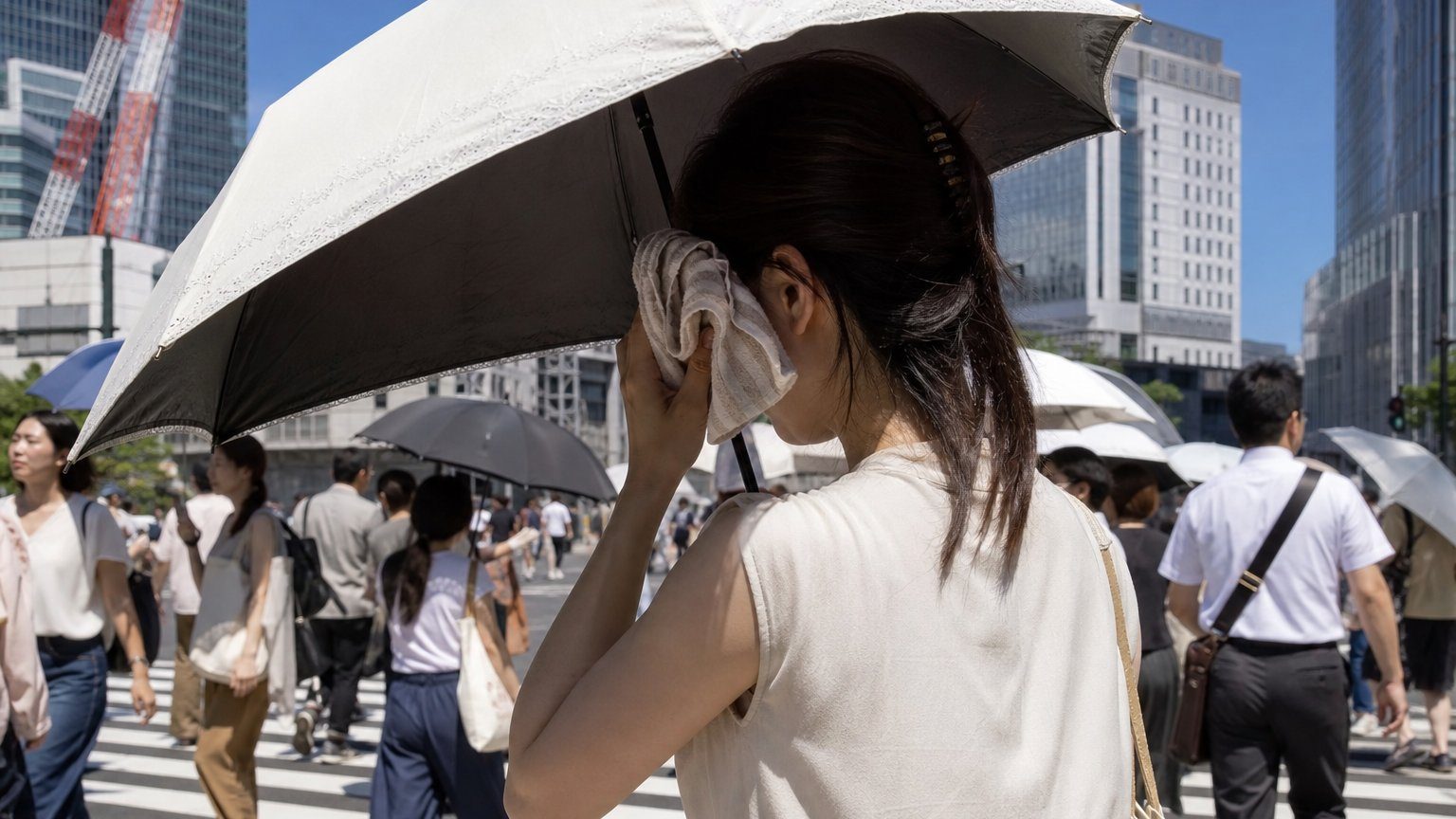
Japan logged its first cruelly hot day as temperatures passed 40C in three cities, while heatstroke alerts spread across more than 40 prefectures.
Japan’s first cruelly hot day has arrived, with the country’s new heat warning term now matching a dangerous reality. Temperatures climbed above 40C in three central Japanese cities on Tuesday, prompting fresh concern as the heatwave stretches on and officials brace for more severe weather next week.
The Japan Meteorological Agency introduced the term in April to describe days when temperatures reach 40C, using it as a sharper warning for the public. On Tuesday, Tajimi, Gujo and Toyota all crossed that line. The agency said the heat is expected to continue into next week, underscoring how Japan’s summer heat is no longer a short-lived discomfort but a growing public safety issue.
Japan already uses separate labels for hotter days above 25C, 30C and 35C. Days above 35C are called moshobi, or extremely hot days. The new kokushobi label goes a step further, with the word koku meaning harsh or cruel. That distinction matters because the country is trying to communicate risk more clearly as extreme weather becomes more intense around the world.
The scale of the heat was clear beyond the three cities that hit 40C. Kyodo News reported that nearly 300 of Japan’s 914 observation points recorded a moshobi on Tuesday. At the same time, authorities issued heatstroke alerts in more than 40 prefectures. Officials advised people to use air-conditioners, drink enough water, take in salt and avoid long periods outdoors.
“Japan logged its first cruelly hot day as temperatures passed 40C in three cities, while heatstroke alerts spread across more than 40 prefectures.”
The pressure on emergency services was also visible in Tokyo. The Tokyo Fire Department said 287 people, ranging in age from three to 103, were taken to hospitals on Tuesday with apparent heatstroke. National broadcaster NHK reported that was the highest number recorded this year. On Wednesday, the fire department issued an ambulance overload alert and urged residents to protect themselves from the heat.
Japan’s recent summers show why the new warning system is being taken seriously. Last year, the country recorded its highest-ever temperature, 41.8C, in Isesaki. A separate report from Kyodo said 1,803 people suffered heatstroke at work last year, and 19 died. Those figures point to a broader shift: what used to be an uncomfortable season is increasingly becoming a public health threat.
The Tokyo government has also pushed office workers to dress more casually, encouraging T-shirts and shorts instead of suits and ties during the heat. That reflects a practical effort to adapt daily life to harsher conditions. For Americans watching from afar, Japan’s new warning is a reminder that extreme heat is not just a weather story; it is a test of public preparedness, workplace norms and emergency response. The takeaway is simple: when temperatures keep climbing, communities need clear warnings and common-sense protections before the heat overwhelms them.
Frequently asked questions
What is Japan’s new “cruelly hot day” warning?
The Japan Meteorological Agency introduced kokushobi in April for days when temperatures reach 40C. The term is meant to warn the public more sharply about extreme heat.
Which places reached 40C on Tuesday?
Tajimi, Gujo and Toyota all crossed 40C on Tuesday, marking Japan’s first “cruelly hot day.”
How widespread was the heat in Japan on Tuesday?
Kyodo News said nearly 300 of Japan’s 914 observation points recorded a moshobi, and authorities issued heatstroke alerts in more than 40 prefectures.
How did the heat affect Tokyo?
The Tokyo Fire Department said 287 people were taken to hospitals on Tuesday with apparent heatstroke, which NHK said was the highest number recorded this year. On Wednesday, the department issued an ambulance overload alert.
We value your privacy 🍪We use cookies for essential features and, if you allow it, to send you a notification whenever we publish a new story. See our Privacy Policy.
📨
Never Miss a Story
Get the headlines that matter delivered straight to your inbox.
📱 On iPhone: tap the Share icon, choose “Add to Home Screen”, then open TheTrueDefender from your Home Screen and tap 🔔 to turn on notifications. (Apple only allows notifications for saved web apps.)
📱 Add TheTrueDefender to your home screen for one-tap access.