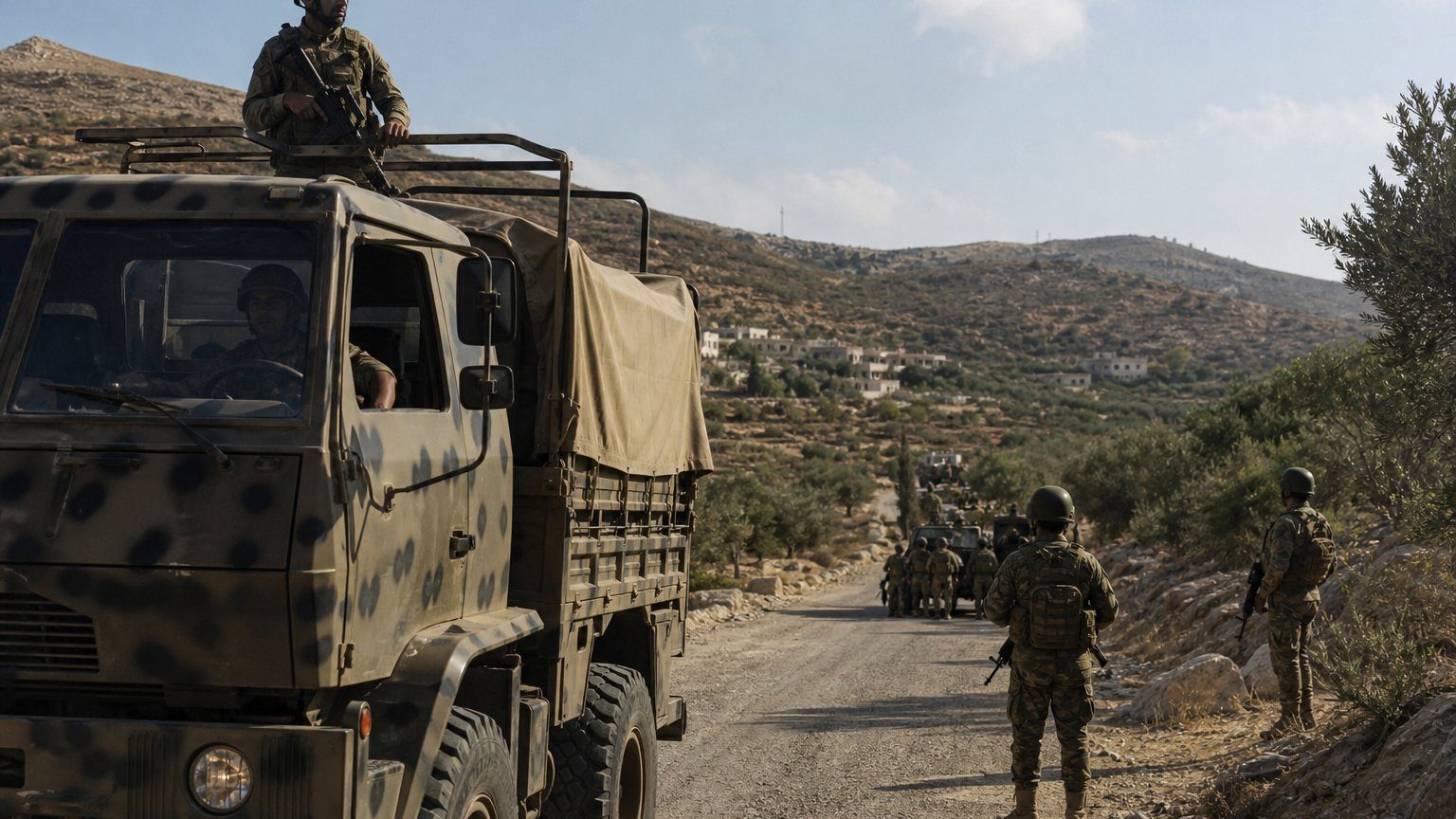
Lebanon army troops have begun moving into a pilot zone in south Lebanon after an Israeli withdrawal under a U.S.-brokered agreement tied to the wider conflict with Hezbollah. The Lebanon army said the deployment started in the village of Zawtar al-Gharbiyeh in Nabatieh district, marking a new phase in a fragile arrangement that aims to reduce fighting while shifting control on the ground.
The army command said engineering units entered Zawtar al-Gharbiyeh on Tuesday morning. Later in the day, it said Israeli forces fired in the area near the Lebanese troops. Israel’s military responded that warning shots were fired after the Lebanese forces crossed into what it called the Israeli-declared security zone. The Lebanese army said the incident hindered the rollout of deployment steps in the pilot zones, though the Israeli side said the Lebanese troops later withdrew and no injuries were reported.
The pilot zone move is part of a broader framework that calls for Israeli forces to pull back from a small area they still occupy and for Hezbollah to give up its weapons. The U.S. state department said on Monday that pilot zone operations had also begun in the villages of Froun and Srifa, in line with the Trilateral Framework agreed by Israel, Lebanon and the United States at the end of June. It described the move as a milestone linked to talks held last week between Israeli and Lebanese representatives in Rome.
Israeli officials said they would adjust their force posture in one of the pilot areas so the Lebanese army could carry out its mission, while still protecting Israeli soldiers and reserving the right to defend against threats. At the same time, the Israeli side said its troops would remain in the security zone, a 10-kilometer strip of occupied Lebanese territory along the border, for as long as necessary to defend northern Israeli communities. Israeli officials also said the purpose of the pilot and the agreement is the disarmament of Hezbollah and the removal of its illegal weapons.
The timing of the deployment added weight to the issue. It began ahead of a meeting in Washington between President Donald Trump and Lebanon’s President Joseph Aoun. Aoun said in the Oval Office that he wanted Trump’s political backing and support for the Lebanese Armed Forces. Trump said the United States would help Lebanon, which he said had been badly treated for decades, and said the country deserved respect. He also said he had concrete plans to help Lebanon build the capacity to disarm Hezbollah, though he gave no details.