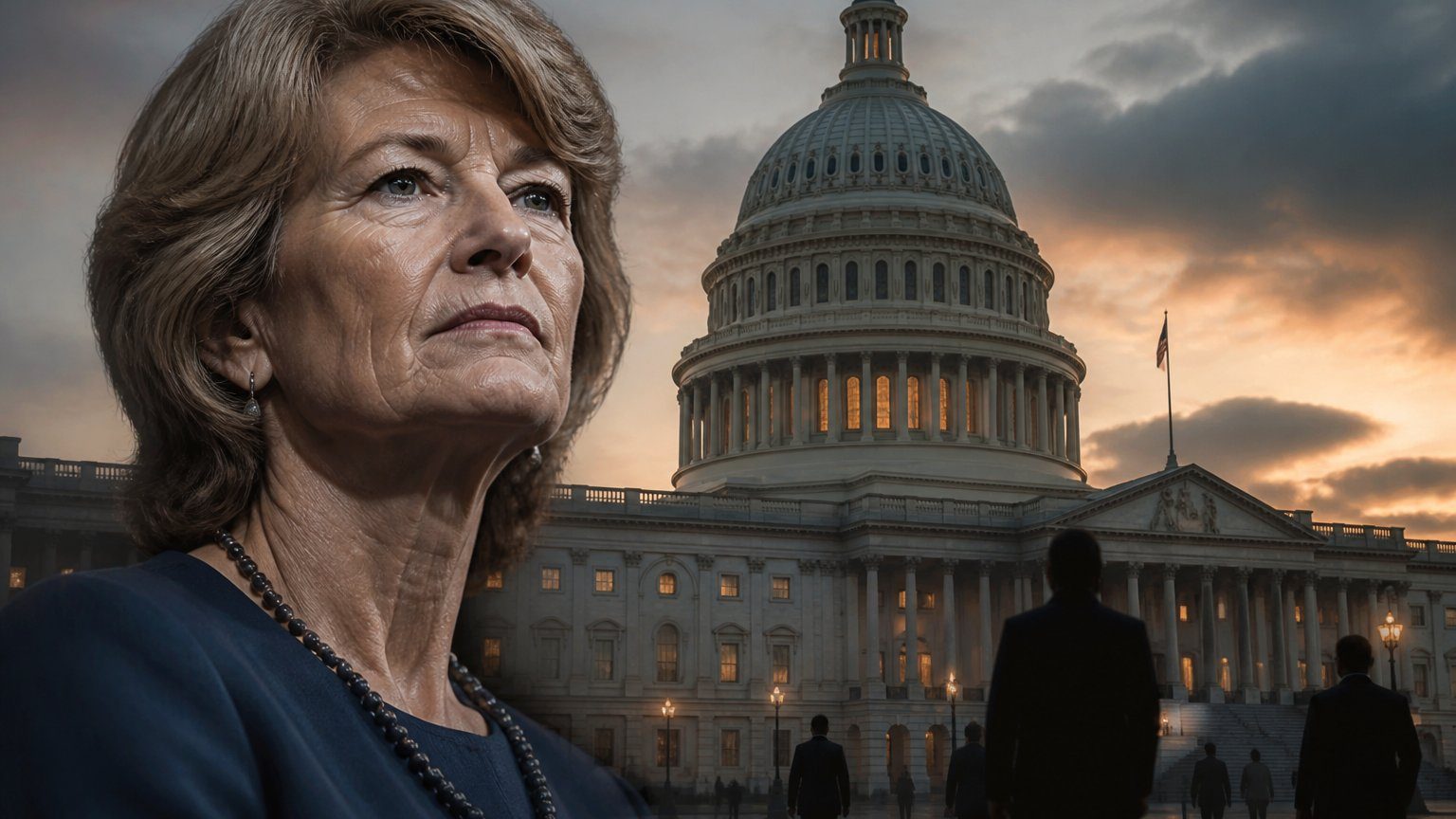
Trump lashes Murkowski after her vote nearly stalled Todd Blanche’s attorney general nomination, underscoring how one senator can still shape the fight.
Trump lashes Murkowski again, and the fight over Todd Blanche’s attorney general nomination shows why the Senate still matters. One senator’s vote can still force a political reckoning, even in an age when many leaders seem to want power to move faster than the Constitution intended.
According to the context, Lisa Murkowski’s opposition nearly blocked Blanche’s nomination in the Senate. That is the kind of moment that tests whether a confirmation process is real oversight or just a rubber stamp. If a nominee for attorney general cannot clear the chamber without real scrutiny, that does not mean the Senate is broken. It means the Senate is doing the job it was built to do.
Trump’s attack on Murkowski is hardly surprising. He has never hidden his instinct to punish Republicans who step out of line, especially on high-stakes nominations. But there is a difference between political pressure and a healthy confirmation fight. A president has every right to defend his choice. He does not have a right to demand obedience from senators who took an oath to advise and consent, not simply approve.
Supporters of Blanche can fairly argue that a president deserves deference when filling a major post like attorney general. The Justice Department matters. The executive branch needs leaders who can act decisively and carry out the administration’s agenda. From that angle, a drawn-out Senate battle can look like partisan obstruction dressed up as principle.
“Trump lashes Murkowski after her vote nearly stalled Todd Blanche’s attorney general nomination, underscoring how one senator can still shape the fight.”
But the case for Murkowski’s resistance is stronger than the easy partisan talking points suggest. The attorney general is not a symbolic job. The office carries enormous influence over law enforcement, civil rights, and the public’s trust in federal justice. When senators slow down a nomination, they are not necessarily attacking the president. They may be insisting that the nominee earn the post rather than simply inherit it from political loyalty.
That is especially important in a country already fed up with raw political power. Americans do not need another lesson in how quickly institutions bend when one party treats dissent as betrayal. They need reminders that the Constitution was designed to force debate, resist steamrolling, and make powerful people answer uncomfortable questions. Murkowski’s near-block is a reminder that the Senate can still say no, or at least not yet.
Trump lashes Murkowski because he understands the symbolism. A single senator resisting him can become a signal to the whole country that not every nomination is inevitable. Whether readers like Blanche or not, that is the real story here: the people’s elected representatives still have leverage if they choose to use it. Why this matters to you: when senators do their duty, they help keep Washington from becoming a one-way street for power.
We value your privacy 🍪We use cookies for essential features and, if you allow it, to send you a notification whenever we publish a new story. See our Privacy Policy.
📨
Never Miss a Story
Get the headlines that matter delivered straight to your inbox.
📱 On iPhone: tap the Share icon, choose “Add to Home Screen”, then open TheTrueDefender from your Home Screen and tap 🔔 to turn on notifications. (Apple only allows notifications for saved web apps.)
🔔
Never miss a breaking storyGet free alerts the moment big US news breaks.
1Tap the ••• menu at the bottom of the screen, then tap Share(in Safari, just tap Share in the bottom bar directly)2Scroll down the menu and tap Add to Home Screen3Tap Add in the top-right corner4Open TheTrueDefender from your Home Screen, then tap 🔔 Subscribe and choose Allow
📱 Add TheTrueDefender to your home screen for one-tap access.



Be the first to share your opinion on this story.