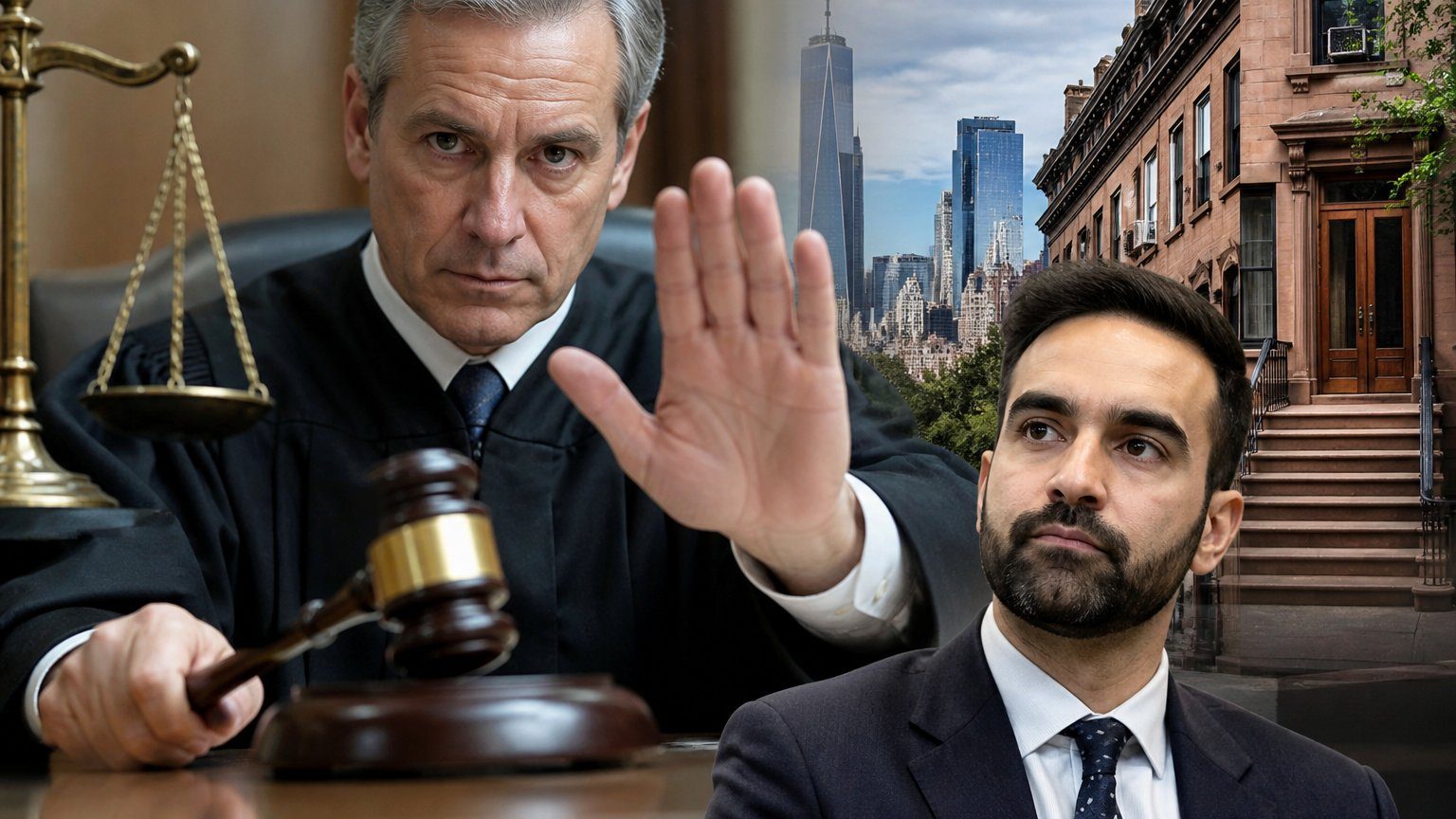
New York’s pied-à-terre tax rollout hit a major legal setback Monday after a judge temporarily stopped Mayor Zohran Mamdani from moving ahead with the new surcharge. The ruling gave homeowners who sued the city an early win and immediately froze the latest effort to put the tax into effect.
Staten Island Supreme Court Justice Wayne Ozzi issued a temporary restraining order after property owners argued the city mishandled the rollout and placed an unfair burden on them. The order wipes out any current deadlines tied to the tax and bars City Hall and the Department of Finance from keeping online a published tax roll that identified more than 950,000 New York City homeowners as being “related” to the new tax.
The judge also stopped the city from taking any further steps based on that supplemental tax roll or on the 17,000 notices the Department of Finance mailed to homeowners. Those notices warned recipients that they could face a five-figure tax bill unless they asked for an exemption. With the court order in place, the city cannot use those notices to advance the tax at this stage.
The case centers on the city’s attempt to launch a new surcharge aimed at pied-à-terre properties, a term commonly used for secondary homes in New York. The challenge from homeowners reflects how quickly tax changes can run into legal resistance when officials move forward with a broad rollout that affects a large group of property owners. In this case, the dispute turned not only on the tax itself, but on how the city handled the process of identifying and notifying homeowners.