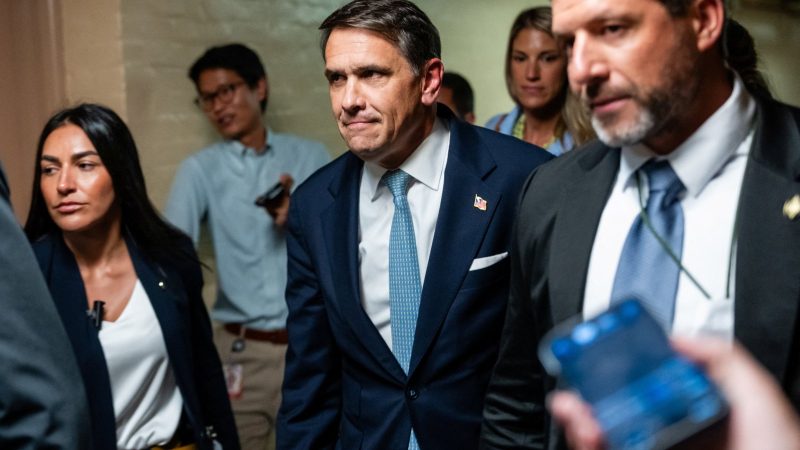
The shutdown deal moved ahead in the Senate as Chuck Schumer backed a funding plan Republicans say was driven by election-year politics.
The government shutdown fight took a major turn in the Senate on Saturday, as lawmakers advanced a funding plan that would keep Washington open past Election Night and into early December. Senate Minority Leader Chuck Schumer and Senate Democrats gave way on the measure, allowing Republicans to claim a hard-fought win after months of uncertainty over whether Democrats would let the government run out of money.
Senate Majority Leader John Thune said Schumer’s move looked like a political calculation. He told Fox News Digital that Democrats likely did not want to spend the next three months fending off Republican attacks for threatening to shut the government down. Thune argued that Democrats were reading the political environment closely and trying to avoid a damaging narrative heading into the fall elections. Schumer, meanwhile, framed the vote as a victory for Democrats, saying they had fought for months to keep the government open and secured important concessions from the Trump administration tied to a rule change on federal grants in the bipartisan continuing resolution.
On the Senate floor, Schumer said Democrats wanted to work with Republicans to produce a budget that would serve Americans. He said the continuing resolution would give lawmakers time to finish a budget that would make life more affordable for working families and restrain what he called Trump’s chaos and corruption. Republicans, however, have spent months arguing that congressional Democrats would not hesitate to push the country toward another shutdown if it helped them politically. GOP lawmakers in the Senate have also taken steps meant to make the consequences of a shutdown more personal for members, including agreeing to give up their paychecks if the government closes.
The vote arrived against the backdrop of two past shutdowns that became historic for their length, lasting 43 days and 76 days. That history has shaped the current standoff and sharpened the pressure on both parties. Thune said the latest round of brinkmanship did not appear to favor Democrats politically, especially with elections approaching and uncertainty around federal funding hanging over the debate. He said Democrats likely saw a shutdown threat as something that could hurt their prospects rather than help them.
“The shutdown deal moved ahead in the Senate as Chuck Schumer backed a funding plan Republicans say was driven by election-year politics.”
For Republicans, the Senate vote marked a useful opening after a long stretch of warnings that Democrats were willing to use the funding deadline as leverage. For Democrats, Schumer’s choice to support the deal gave him a way to argue that his caucus had pushed for concessions while still avoiding a closure. The competing narratives reflect a familiar Washington pattern: both parties claim they are protecting the public, while each tries to make the other party own the risk of a shutdown.
The battle is not finished. The shutdown issue now moves to the House, and if the measure clears that chamber it would buy Congress time to keep negotiating through the appropriations process. But that next phase would come after the midterm elections, during the lame-duck period, when lawmakers may have less incentive to strike a broader deal. Senator John Kennedy of Louisiana said a full budget by December 11 sounds highly unlikely, underscoring how shaky the path ahead still looks.
For American families watching paychecks, services, and government stability, the Senate’s move avoids an immediate crisis but does not resolve the larger funding fight. The next test is whether the House follows through and whether Congress can do more than postpone the same showdown again.
Frequently asked questions
What did the Senate do on Saturday?
Lawmakers advanced a funding solution meant to prevent a Government Shutdown and keep the government funded into early December.
Why did Republicans say Schumer changed course?
John Thune said Schumer likely wanted to avoid spending months defending attacks that Democrats wanted to shut the government down.
How did Schumer describe the deal?
Schumer said Democrats wanted to work across the aisle and that the continuing resolution gave them breathing room on the budget.
What happens next in the shutdown fight?
The issue now moves to the House. If the measure passes there, Congress will still need broader appropriations negotiations later in the year.
We value your privacy 🍪We use cookies for essential features and, if you allow it, to send you a notification whenever we publish a new story. See our Privacy Policy.
📨
Never Miss a Story
Get the headlines that matter delivered straight to your inbox.
📱 On iPhone: tap the Share icon, choose “Add to Home Screen”, then open TheTrueDefender from your Home Screen and tap 🔔 to turn on notifications. (Apple only allows notifications for saved web apps.)
🔔
Never miss a breaking storyGet free alerts the moment big US news breaks.
1Tap the ••• menu at the bottom of the screen, then tap Share(in Safari, just tap Share in the bottom bar directly)2Scroll down the menu and tap Add to Home Screen3Tap Add in the top-right corner4Open TheTrueDefender from your Home Screen, then tap 🔔 Subscribe and choose Allow
📱 Add TheTrueDefender to your home screen for one-tap access.