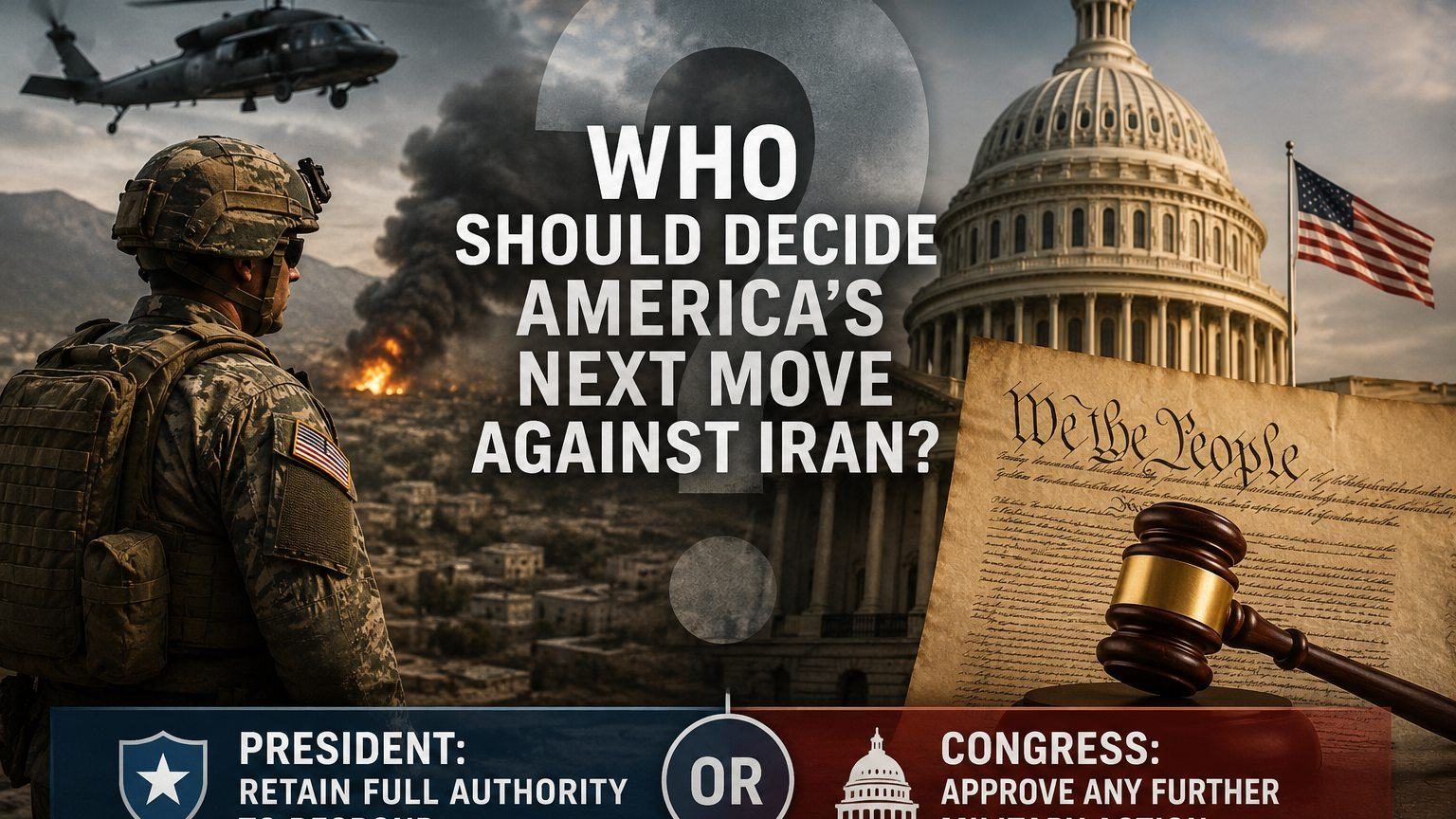
America did not become a constitutional republic so that wars could drift into existence through habit, euphemism, and executive momentum. If we want a serious foreign policy, Congress must stop treating war powers as an afterthought and start exercising the authority the Constitution plainly gives it.
America has spent too many years stumbling into military action by inertia. A strike here, a deployment there, a “limited” mission that quietly grows teeth — and before long, the nation is involved in conflict without the kind of public debate the Constitution was designed to require. That is not prudence. It is constitutional drift. Congress should take back control of America’s war powers, not because war is never necessary, but because war is too grave to be left to the momentum of the moment.
The framers made a deliberate choice: the power to declare war belongs to Congress, not the president. They understood that starting wars should be hard, slow, and publicly accountable. A single executive can act quickly; that may be useful in moments of immediate danger, but it is a dangerous way to normalize sustained military force. When lawmakers let presidents stretch existing authorizations, rely on vague legal theories, or use narrow operations that expand over time, Congress stops being a coequal branch and becomes a spectator.
Supporters of broad presidential war powers make a serious case. The world does not wait for committee hearings. Threats can emerge quickly, enemies can move fast, and the United States often needs one commander in chief who can respond decisively. In a genuine emergency, hesitation can cost lives. That argument has force, and no serious person wants Congress to micromanage battlefield decisions or demand a floor vote before every urgent defensive action.
But that is not the real issue. The real issue is not whether a president can respond to an immediate attack; it is whether presidents should be able to keep initiating and sustaining military engagements with only the faintest congressional blessing. Too often, Congress prefers the political convenience of silence. Lawmakers avoid responsibility when a conflict seems popular and avoid hard votes when it does not. Then, when the mission becomes costly or controversial, they complain that the executive overreached. That is not oversight. It is abdication.
“America did not become a constitutional republic so that wars could drift into existence through habit, euphemism, and executive momentum. If we want a serious foreign policy, Congress must stop treating war powers as an afterthought and start exercising the authority the Constitution plainly gives it.”
Some defend this arrangement by saying Congress is too divided, too slow, or too political to authorize force responsibly. But that criticism cuts both ways. If the nation is going to commit blood and treasure, division is not a bug; it is a feature. War should not be easy. Requiring Congress to debate and vote forces the country to confront the real tradeoffs: the risks, the objectives, the likely duration, and the exit strategy. It makes war harder to start precisely because war should be harder to start.
Congress does not need to weaken the presidency to restore its role. It needs to use the tools already available: clear authorizations, sunset provisions, regular review, and genuine funding leverage. If a military mission is important enough to continue, it is important enough to survive democratic scrutiny. If it cannot survive scrutiny, perhaps it never had a sound constitutional foundation in the first place. Reclaiming war powers would not make America less safe. It would make our decisions more legitimate, more deliberate, and more accountable.
That is the heart of the matter. A republic is not supposed to drift into war by habit or convenience. If Congress believes the president must be checked in domestic affairs, it should be even more vigilant when the issue is force abroad. The stakes are higher, the consequences longer lasting, and the moral burden heavier. Congress should take back control of America’s war powers before the exception becomes the rule. If you think that balance has already gone too far toward the White House — or that modern threats demand something different — I’d welcome your view.
Frequently asked questions
Why does the article say Congress should take back control of war powers?
Because the U.S. has too often entered military action through momentum and vague approvals rather than deliberate public debate. The article argues war is too serious to be left mainly to executive initiative.
Does the article oppose all presidential military action?
No. It says presidents need flexibility to respond quickly to immediate danger or attack. The concern is with presidents sustaining or expanding military engagements without strong congressional approval.
What does the article say Congress has been doing wrong?
It says lawmakers often stay silent when conflicts are politically convenient and avoid hard votes when they are not. That, the article argues, turns Congress into a spectator rather than a coequal branch.
How does the article say Congress can restore its role?
It recommends clear authorizations, sunset provisions, regular review, and using funding leverage. The article says these tools would force military missions to face democratic scrutiny.
This is an open discussion — reply to others or start a new comment below.
RH
Robert Hayes1 week ago
We keep entering conflicts without explaining the final objective. Before another dollar is spent, Americans deserve to know what victory actually means.
MT
Michael Turner1 week ago
Congress should absolutely approve any major military action. The Constitution does not give one person unlimited authority to keep America in an overseas war.
SR
Steven Richardson1 week ago
That is a fair point. Emergency action may sometimes be necessary, but Congress should have to vote once the situation becomes a longer military campaign.
TR
Thomas Reed1 week ago
Congress controls funding, so it already has the power to stop military action. Lawmakers should use that authority instead of blaming the White House afterward.
We value your privacy 🍪We use cookies for essential features and, if you allow it, to send you a notification whenever we publish a new story. See our Privacy Policy.
📨
Never Miss a Story
Get the headlines that matter delivered straight to your inbox.
📱 On iPhone: tap the Share icon, choose “Add to Home Screen”, then open TheTrueDefender from your Home Screen and tap 🔔 to turn on notifications. (Apple only allows notifications for saved web apps.)
📱 Add TheTrueDefender to your home screen for one-tap access.

We keep entering conflicts without explaining the final objective. Before another dollar is spent, Americans deserve to know what victory actually means.
Congress should absolutely approve any major military action. The Constitution does not give one person unlimited authority to keep America in an overseas war.
That is a fair point. Emergency action may sometimes be necessary, but Congress should have to vote once the situation becomes a longer military campaign.
Congress controls funding, so it already has the power to stop military action. Lawmakers should use that authority instead of blaming the White House afterward.