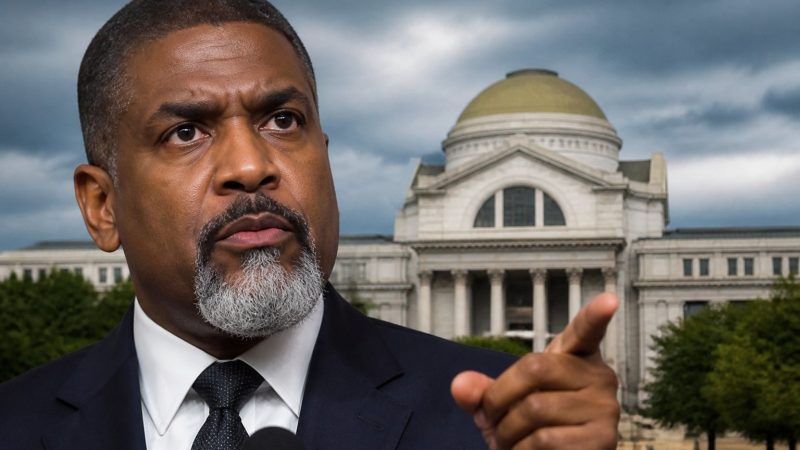
Smithsonian Director Anthea Hartig is facing new scrutiny over a history scholar’s claim that her work reflects an activist agenda, not neutrality.
Smithsonian Director Dr. Anthea Hartig is under fresh scrutiny after a historian accused her of bringing an activist, Marxist-influenced approach to the nation’s museum system. The dispute centers on whether Hartig has led as an objective historian or as a political advocate, a question that goes to the heart of how the Smithsonian presents American history.
Historian Dr. Jody Edward Ginn said Hartig’s career shows a pattern of pushing organizations toward activism. He pointed to her time as president of the Organization of American Historians and her leadership at the California Historical Society, arguing that her work has not been neutral scholarship. Ginn said Hartig has long been known for advancing these views and described her as an advocate rather than a traditional historian. He also said she has presented herself as the final authority on historical questions, a stance he rejected.
One of Ginn’s main examples is Hartig’s 1995 article, In a World He Has Created, published by the California Historical Society. In that piece, Hartig used the ideas of Karl Marx to examine California’s citrus industry and argued that a wealthy ruling class shaped the Southern California landscape to protect class power. She also wrote about photographs of nearby estates and described them as the kind of promotional material that reflected elitist, racist and sexist attitudes of the era. Ginn said the article reads less like a historical study and more like a political argument built around a Marxist point of view.
Hartig later spent seven years as executive director of the California Historical Society, beginning in 2011. Ginn said that experience, along with her writings, shows a consistent pattern in how she has approached historical institutions. He argued that her leadership style has aimed to reshape those organizations around an activist mission rather than a neutral educational one.
“Smithsonian Director Anthea Hartig is facing new scrutiny over a history scholar’s claim that her work reflects an activist agenda, not neutrality.”
Her role at the Organization of American Historians drew similar criticism. Hartig took a one-year presidency in 2023, and Ginn said the group is openly aligned with activism. The organization’s website says the OAH actively works with advocacy partners to support history and advance its mission. Hartig’s 2024 presidential address, published in the Journal of American History, was titled “Where Have All the Women Gone? Let’s Bring Them Back before It’s Too Late.” In that address, she said that despite years of activism and historical research, women’s lives, accomplishments, bodies and futures matter less.
The criticism escalated after Hartig testified on Capitol Hill in July, when she said the Smithsonian operates under nonpartisanship and “does not take sides in America’s political debates.” Ginn said that claim does not match her past work. He pointed to a resurfaced video in which Hartig said history should be used as a “tool of social justice.” In his view, that language undercuts her testimony and raises broader concerns about whether the Smithsonian is being guided by scholarship or activism.
The debate arrives at a sensitive time for the Smithsonian, which sits at the center of how Americans learn about their past. For many readers, the issue is not just one museum leader’s record, but whether major public institutions can still be trusted to present history without partisan filtering. The fight over Hartig’s background is likely to keep feeding wider arguments over ideology, public education and the role of historians in shaping civic memory. The plain takeaway: Americans are being asked whether the Smithsonian is serving history, or a cause.
Frequently asked questions
Who is at the center of this controversy?
Smithsonian Institution Director Dr. Anthea Hartig is facing criticism from historian Dr. Jody Edward Ginn over her past writings and leadership roles.
What did Jody Edward Ginn object to in Hartig’s work?
He said her writings and public leadership show an activist, Marxist-influenced approach rather than neutral historical scholarship.
What example from Hartig’s past did Ginn highlight?
He pointed to her 1995 article, In a World He Has Created, which used Karl Marx’s ideas to analyze California’s citrus industry.
Why does this matter beyond one person’s career?
The dispute touches on whether the Smithsonian and other public History institutions are being guided by impartial scholarship or Political Activism.
We value your privacy 🍪We use cookies for essential features and, if you allow it, to send you a notification whenever we publish a new story. See our Privacy Policy.
📨
Never Miss a Story
Get the headlines that matter delivered straight to your inbox.
📱 On iPhone: tap the Share icon, choose “Add to Home Screen”, then open TheTrueDefender from your Home Screen and tap 🔔 to turn on notifications. (Apple only allows notifications for saved web apps.)
🔔
Never miss a breaking storyGet free alerts the moment big US news breaks.
1Tap the ••• menu at the bottom of the screen, then tap Share(in Safari, just tap Share in the bottom bar directly)2Scroll down the menu and tap Add to Home Screen3Tap Add in the top-right corner4Open TheTrueDefender from your Home Screen, then tap 🔔 Subscribe and choose Allow
📱 Add TheTrueDefender to your home screen for one-tap access.