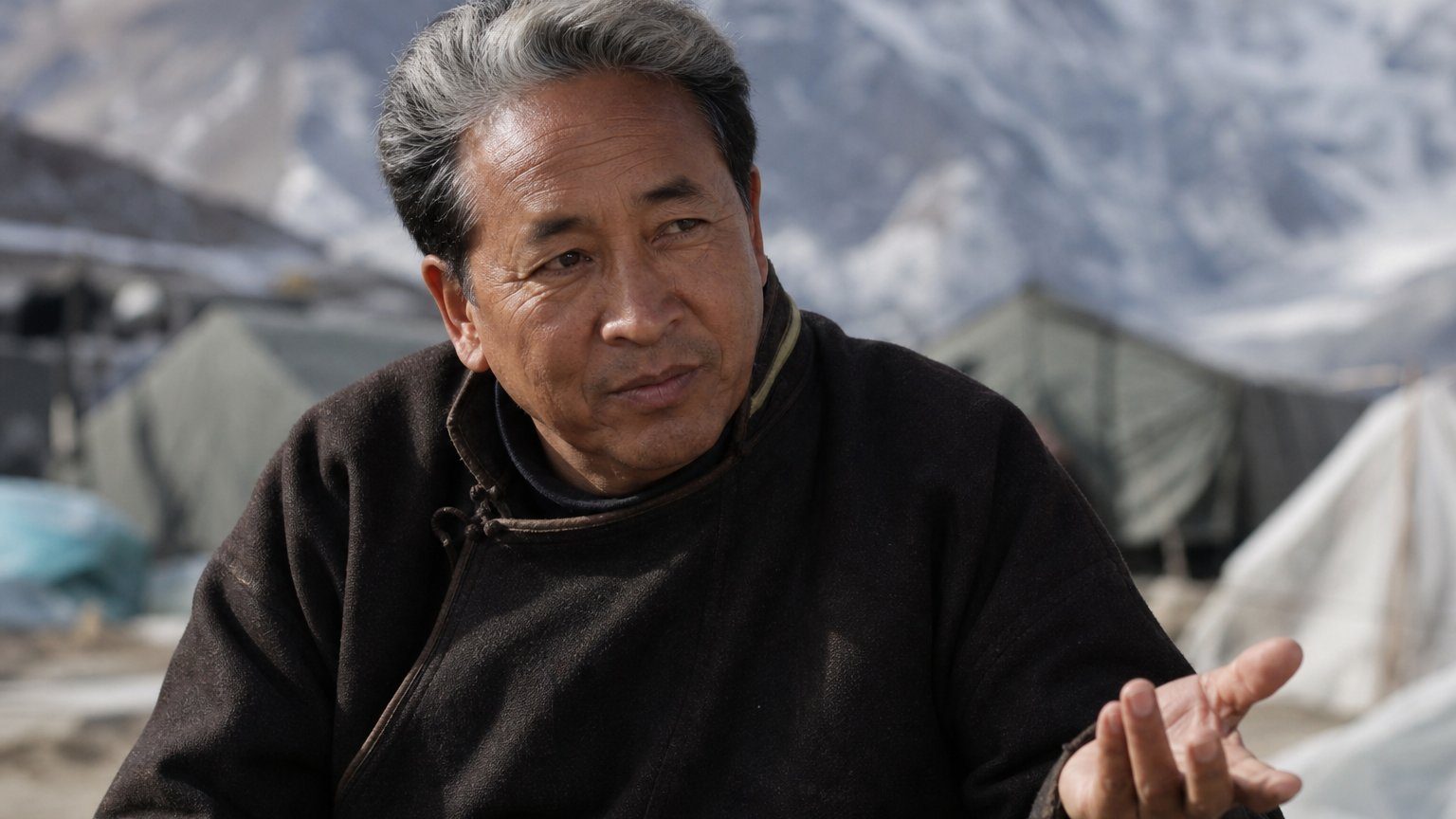
Sonam Wangchuk ends hunger strike after 26 days as India’s exam-leak protests keep growing and activists press for the education minister’s resignation.
Sonam Wangchuk ends hunger strike after 26 days, stepping back from a fast that had become a flashpoint in India’s widening protests over exam leaks, student anger and pressure on the government in New Delhi. His decision came after a day of talks between representatives of the Cockroach Janta Party and officials, while demonstrators continued to demand the resignation of Education Minister Dharmendra Pradhan.
Wangchuk said he ended the hunger strike after receiving assurances that no legal action would be taken against protesters at Jantar Mantar, the main protest site in Delhi, or those who marched toward parliament. He also said he had been told the NEET paper leak, accountability in the examination system and broader reforms would be discussed in parliament. He did not receive any specific promise on Pradhan’s removal.
The talks did not settle the central dispute. CJP spokesperson Ashutosh Ranka said the movement would keep growing until Pradhan resigned, and warned that a fresh nationwide protest call could follow if that did not happen soon. Another CJP spokesperson, Saurav Das, said the government had responded positively to two other demands: compensation for families of students who reportedly died by suicide after the cancellation of a major medical entrance exam in May, and withdrawal of police cases against protesters who joined the march to parliament.
Federal minister JP Nadda said the government would inform the CJP on Saturday about the discussions held inside government. Prime Minister Narendra Modi also weighed in with a video message, posted late on Thursday, promising a tough new law on examination paper leaks and saying he was well aware the problem was serious. He said he had received a draft of the law and wanted to introduce it soon in parliament.
“Sonam Wangchuk ends hunger strike after 26 days as India’s exam-leak protests keep growing and activists press for the education minister’s resignation.”
The Sonam Wangchuk ends hunger strike development followed a tense stretch that helped turn the protests into a national issue. Authorities had forcibly removed Wangchuk from the protest site and admitted him to hospital last Saturday, citing health concerns. Two days later, police in Delhi used force against protesters trying to march to parliament, leaving dozens injured and triggering a wave of public anger that gave the movement new momentum.
The protests have been driven by anger over exam paper leaks, a long-running problem in India that has affected public confidence in the education system. The latest trigger was the leak of the question paper for the National Eligibility cum Entrance Test, or NEET. Nearly 2.28 million candidates took that exam on 3 May. It was cancelled days later, and a re-test was held. For many young Indians, the issue has come to stand for a deeper sense that hard work is being undercut by corruption and disorder.
The CJP, which began as an online satirical movement, has since become one of the most visible outlets for youth frustration in the country. It emerged in May after a comment by India’s top judge comparing unemployed young people drifting toward journalism and activism with cockroaches and parasites, later clarified as a reference to people with fake and bogus degrees. Since then, the movement has grown rapidly on social media and in the streets, becoming one of the biggest public displays of dissent against Modi’s government since it took office in 2014.
On Friday, the scene at Jantar Mantar was loud and energized. Hundreds of young protesters spent the night on roads and pavements, chanting for Pradhan’s resignation and urging Modi to remove him. Security was tightened across the area, with a heavy police presence, mobile internet suspended in several locations and 18 metro stations closed. Some protesters said they were relieved Wangchuk had stopped fasting after 26 days, saying they feared for his health and saw his sacrifice as a major act of support for the cause. Why this matters: the protests have pushed exam integrity, student anger and government accountability into the center of national debate in the world’s largest democracy.
Frequently asked questions
Why did Sonam Wangchuk end his hunger strike?
He said he stopped after getting assurances that protesters at Jantar Mantar and those who marched toward parliament would not face legal action. He also said NEET paper leaks, accountability in the exam system, and broader reforms would be discussed in parliament.
Did the protesters get what they wanted from the talks?
Not fully. The talks did not settle the main dispute, and the movement said it would continue until Education Minister Dharmendra Pradhan resigned.
What did the government promise about exam leaks?
Prime Minister Narendra Modi said the government was preparing a tough new law on examination paper leaks and wanted to introduce it soon in parliament.
What events helped turn the protests into a national issue?
Authorities forcibly removed Wangchuk and admitted him to hospital, and police later used force against protesters marching to parliament, injuring dozens. Those events drew wider public anger and gave the movement new momentum.
We value your privacy 🍪We use cookies for essential features and, if you allow it, to send you a notification whenever we publish a new story. See our Privacy Policy.
📨
Never Miss a Story
Get the headlines that matter delivered straight to your inbox.
📱 On iPhone: tap the Share icon, choose “Add to Home Screen”, then open TheTrueDefender from your Home Screen and tap 🔔 to turn on notifications. (Apple only allows notifications for saved web apps.)
📱 Add TheTrueDefender to your home screen for one-tap access.