⚡ LATEST
SpaceX Rocket Debris Hits Moon, South Korea Says

SpaceX Rocket Debris Hits Moon, South Korea Says

South Korea’s space agency released Moon images showing the impact of SpaceX rocket debris after the Falcon 9 upper stage struck the lunar surface Wednesday.

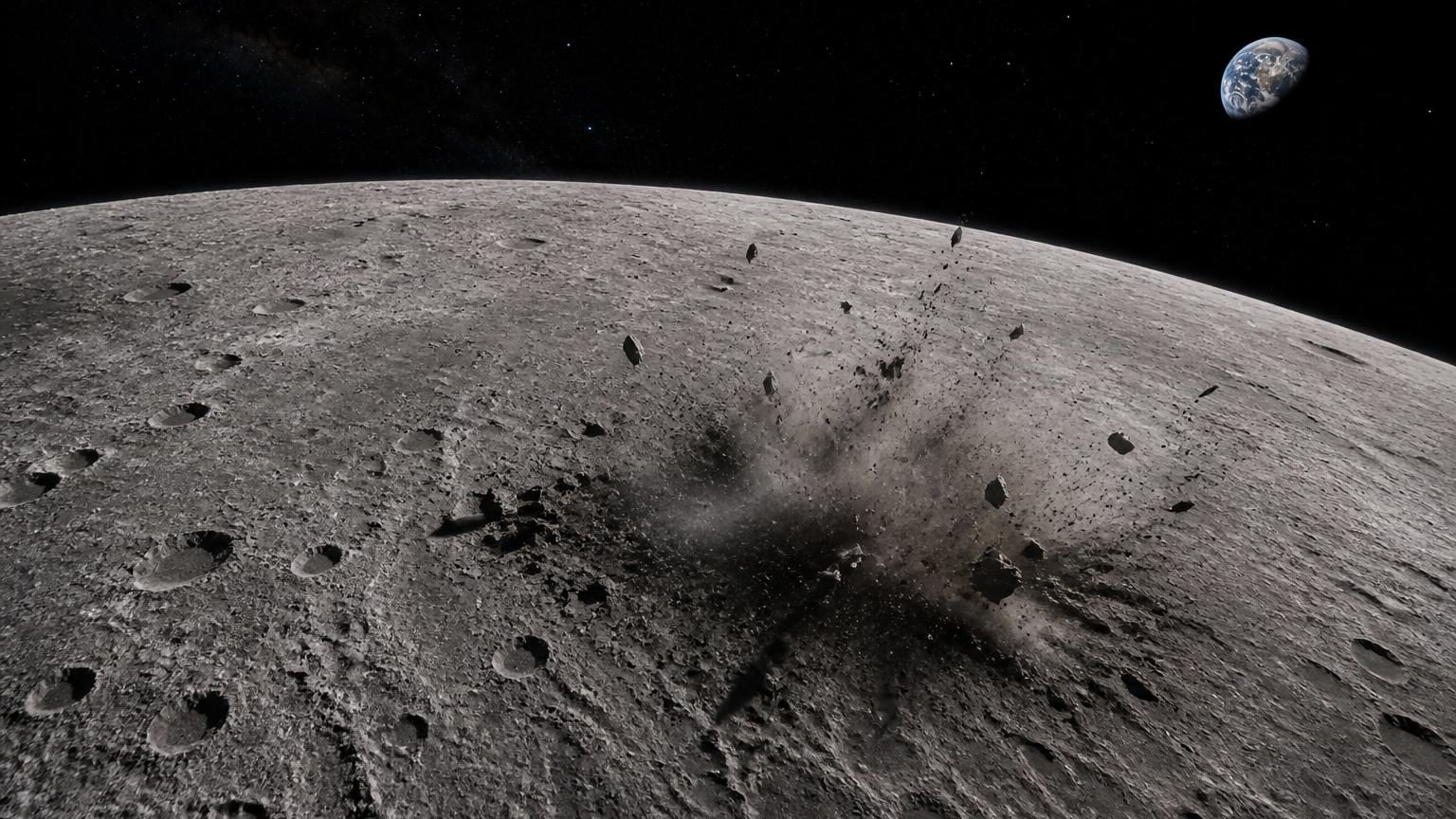
SpaceX rocket debris struck the Moon on Wednesday, and South Korea’s space agency has now released images showing the impact on the lunar surface. The Korean AeroSpace Administration, known as KASA, said its lunar orbiter Danuri captured the Moon both before and after the collision and shared the pictures for comparison.

According to KASA, the impact occurred at about 06:35 GMT. The object was the empty upper stage of a Falcon 9 rocket, a reusable SpaceX booster component that scientists had predicted would slam into the Moon at roughly 5,400 mph, or 8,700 km/h. The stage is about the size of a five-storey building and weighs around 4,000 kg on Earth. KASA said the flash from the collision would have been difficult to catch even with powerful amateur telescopes, though larger observatories are now studying the data.

The rocket part had been in orbit since January last year, when it lifted off from Florida carrying two lunar landers. Its job was to push that upper stage hard enough to send the landers beyond Earth’s orbit and toward the Moon. After that, the spent stage remained in a long, looping path that swung between Earth and the Moon. Over the following 18 months, the combined pull of the Earth, Moon and Sun, along with sunlight, slowly altered its course until astronomers determined it was headed for the Moon and speeding up each day.

SpaceX’s Falcon 9 system is built so that part of the rocket can return to Earth while other sections are discarded in space, and the company has used it on several missions. The same booster section from the January 2025 mission is scheduled for its 18th flight on 10 August, when SpaceX says it plans to launch 29 Starlink satellites into low-Earth orbit.


The impact did not pose a danger to Earth, but it renewed concern among astronomers about the buildup of space junk. University of Cambridge astronomer Matt Bothwell said space is becoming more crowded as more hardware is launched each year. He warned that within a few decades it could become very difficult to move beyond Earth’s orbit if congestion keeps growing. That warning is part of a wider debate over how much debris can be left drifting after launches and mission failures.

For South Korea, the images offer a rare look at a lunar collision from an orbiting spacecraft and a chance to study how such impacts alter the surface. For American readers, the episode is another reminder that the same space launch systems powering satellite networks and lunar missions are also adding to the debris problem that can affect future access to space. The key issue now is whether space agencies and launch providers can keep expanding into orbit without leaving behind hazards that make the next generation of missions harder to carry out.

Images from Danuri are now giving scientists a closer look at one of the latest signs of how crowded near-Earth space has become.

Frequently asked questions

What hit the Moon on Wednesday?
South Korea’s space agency said debris from a Spacex Falcon 9 rocket’s empty upper stage struck the lunar surface.
How did South Korea confirm the impact?
The Korean AeroSpace Administration said its lunar orbiter Danuri captured images of the Moon before and after the collision.
Was Earth in danger from the impact?
No. The impact did not pose any danger to Earth, according to the report.
Why are astronomers concerned about this incident?
Astronomers say it adds to concern about Space Debris, which is making near-Earth space more crowded over time.
Full coverage: South Korea
SpaceX Shares Open the Door for Early Employees
Up Next · in US News

SpaceX Shares Open the Door for Early Employees

4 min read Continue reading

More from World

View all →
📨

Never Miss a Story

Get the headlines that matter delivered straight to your inbox.