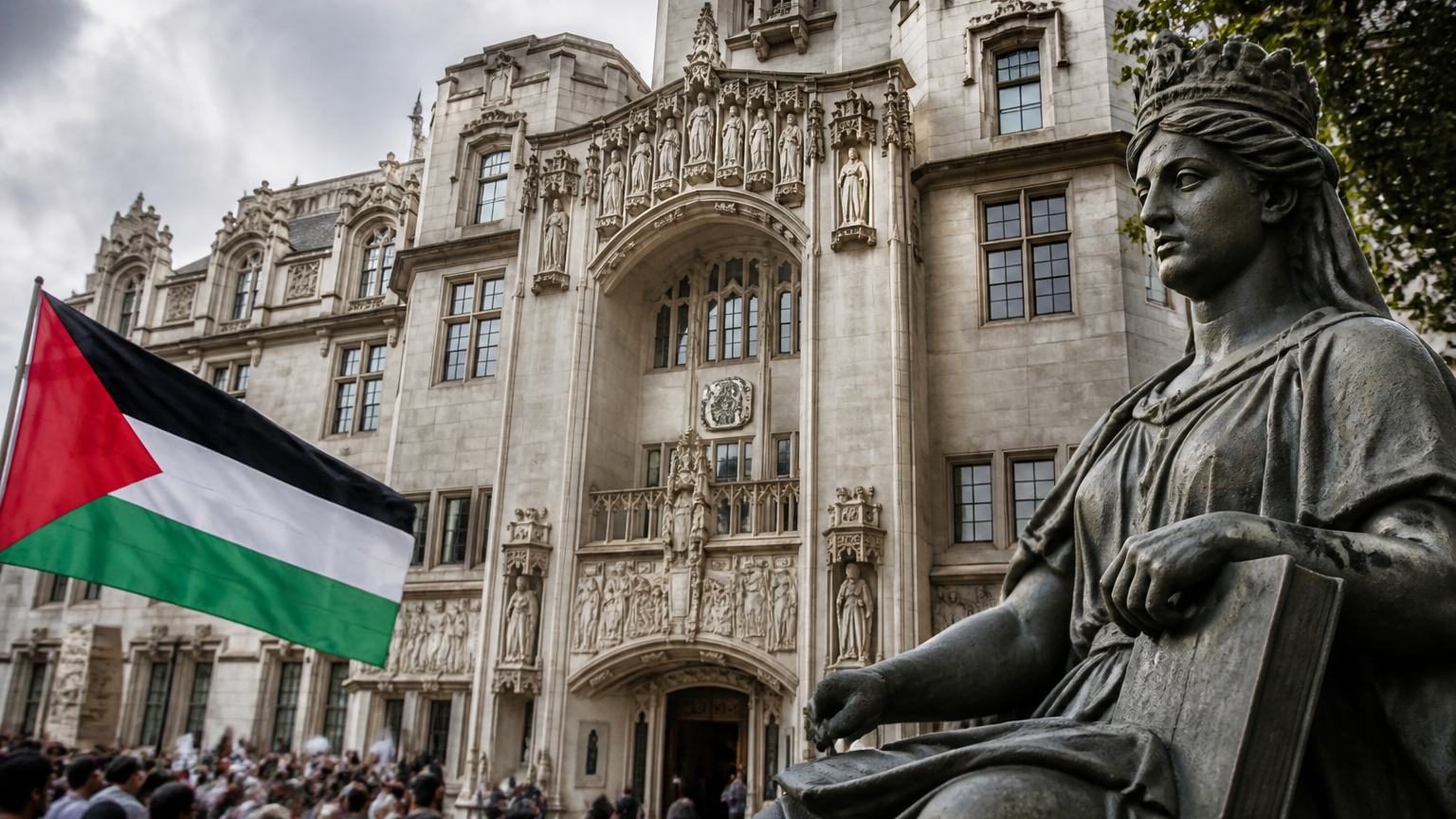
The Supreme Court will review the Palestine Action ban, setting up a high-stakes legal fight over how terrorism law is used against protest groups in Britain. The court said on Thursday that Huda Ammori, the group’s co-founder, can appeal the proscription that took effect in July 2025.
The move marks a setback for the Home Office and follows a lengthy dispute over whether the government went too far by using terrorism powers against the group. The reasons for the appeal have not yet been published, but the BBC understands Ammori’s case centres on the argument that the ban breaches human rights. Officials say the hearing will be fast-tracked and take place after the summer break.
Home Secretary Shabana Mahmood said the government will defend the case firmly. She said the Court of Appeal had upheld the ban and argued that Palestine Action was not a normal protest or civil disobedience group. In her statement, she said the group had carried out acts of terrorism, praised people involved in those acts and encouraged violence. She added that lawful protest in support of Palestinians is still protected and that there is a difference between backing Palestine and backing a proscribed group.
The fight over the Palestine Action ban has already moved through several courts. Former Home Secretary Yvette Cooper ordered the group proscribed on advice from police and security officials after a wave of break-ins aimed at Elbit, an Israeli-owned defence company. The High Court initially said the ban was unlawful, but five judges at the Court of Appeal later overturned that ruling and unanimously said Cooper had acted within her powers.
That decision is now headed to the Supreme Court, where the outcome could shape how terrorism legislation is interpreted in the UK. The law, approved by MPs, allows ministers to ban a group if it is linked to serious violence or serious criminal damage carried out for an ideological cause. It also gives police broader powers to investigate and charge people over organising activity and fundraising tied to a proscribed group.