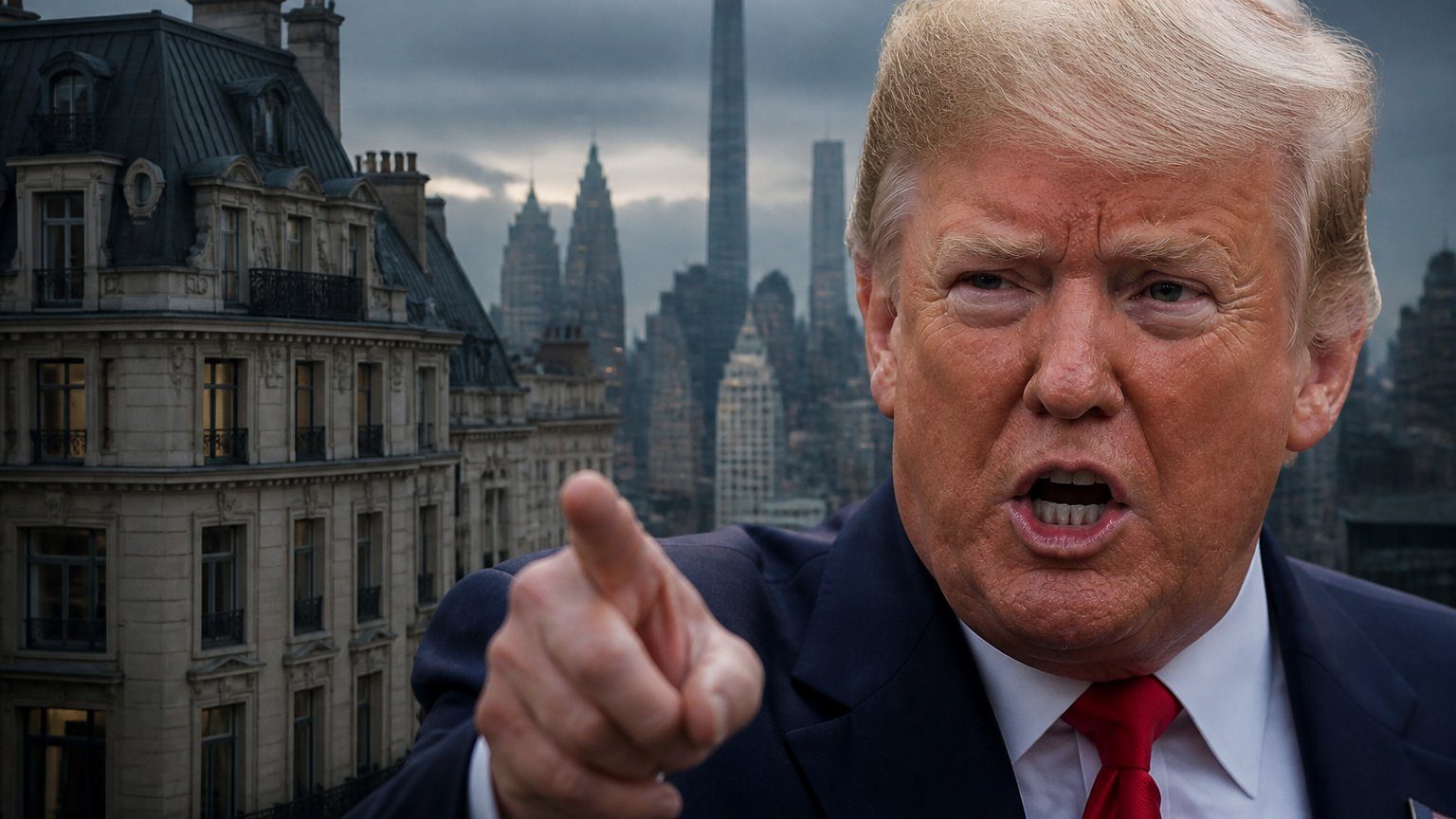
President Trump blasted New York’s pied-à-terre tax on luxury second homes as amateur hour, while the surcharge faces a court fight.
President Trump on Tuesday took aim at New York’s pied-à-terre tax, calling the new surcharge on luxury second homes in New York City a reckless move that could damage the city he once called home. In a post on Truth Social, Trump said he would have the federal government examine whether it has legal authority to stop the tax before, in his words, disaster strikes.
Trump described the policy as “pure Amateur Hour” and said it would “RUIN” New York City. He argued that federal officials should look for a way to avert what he called a disaster for the millions of people who want the city to prosper. In the same post, he portrayed New York as heading toward decline under what he called a dangerous political experiment, warning that the city and state could become “a filthy, crime ridden, decrepit place of mockery and scorn.”
The rhetoric was characteristically forceful, but the practical question is whether the federal government has any role to play in a tax that was approved under state and city authority. Trump said he wanted to determine whether Washington has “any legal right” to intervene. That prospect is far from settled, and his statement appeared to signal an attempt to test the boundaries between federal power and local taxation policy rather than an immediate action.
The comments came one day after a Staten Island judge temporarily blocked Mayor Zohran Mamdani’s rollout of the tax because of a lawsuit claiming the city mishandled the process and placed an unfair burden on homeowners. The court order gave the policy a pause, but it did not end the fight. Mamdani’s administration has already appealed the temporary restraining order, keeping the tax in place while the case moves toward a hearing in a higher court.
“President Trump blasted New York’s pied-à-terre tax on luxury second homes as amateur hour, while the surcharge faces a court fight.”
The pied-à-terre tax was approved by state lawmakers and Gov. Kathy Hochul. It targets owners of luxury second homes in New York City valued at $5 million or more, or at $1 million for co-ops and condos. The policy is aimed at high-end property owners who maintain secondary residences rather than primary homes in the city, a distinction that has long made New York’s real estate market a target for debates over fairness, taxation and public revenue.
Supporters of such measures often frame them as a way to capture more revenue from expensive properties that benefit from the city’s services and prestige while sitting partially vacant for much of the year. Critics, by contrast, argue that these taxes can discourage investment, unsettle the property market and create uncertainty for owners who already face some of the highest carrying costs in the country. The current dispute reflects that broader tension, with city and state leaders seeking new revenue sources while property owners push back against added costs.
Trump’s intervention also adds a national political dimension to what began as a local tax fight. By casting the policy as a threat to one of America’s biggest cities, he elevated the issue beyond the usual arguments over tax rates and revenue. His remarks were also personal: he said it was difficult, as president, to watch what was happening to a place he once loved, underscoring the long-standing connection he has often claimed to New York even after moving much of his political base elsewhere.
For now, the tax remains caught between legal challenge and political pressure. The immediate question is whether the appeal will allow the surcharge to proceed while the courts review the underlying dispute. The broader question is whether New York can impose new taxes on its wealthiest property owners without setting off a larger battle over affordability, development and the city’s future direction.
Frequently asked questions
What did President Trump say about the tax?
He called it “pure Amateur Hour” and said it could “RUIN” New York City. He also said he would look into whether the federal government can legally stop it.
Why is the tax facing a court fight?
A Staten Island judge temporarily halted the rollout after a lawsuit claimed the city mishandled it and unfairly burdened homeowners.
Who approved the pied-à-terre tax?
State lawmakers and Gov. Kathy Hochul approved it.
Which properties does the tax target?
It applies to luxury second homes in New York City worth $5 million or more, or $1 million for co-ops and condos.
We value your privacy 🍪We use cookies for essential features and, if you allow it, to send you a notification whenever we publish a new story. See our Privacy Policy.
🇺🇸
The Defender Morning Brief
5 stories Americans need to know. 3 minutes. Every morning. Free.
📱 On iPhone: tap the Share icon, choose “Add to Home Screen”, then open TheTrueDefender from your Home Screen and tap 🔔 to turn on notifications. (Apple only allows notifications for saved web apps.)
🔔
Stay Ahead of Breaking NewsGet alerts when major stories break — not every time we publish.Breaking news only. No spam. Turn off anytime.
1Tap the ••• menu at the bottom of the screen, then tap Share(in Safari, just tap Share in the bottom bar directly)2Scroll down the menu and tap Add to Home Screen3Tap Add in the top-right corner4Open TheTrueDefender from your Home Screen, then tap 🔔 Subscribe and choose Allow
📱 Add TheTrueDefender to your home screen for one-tap access.