⚡ LATEST
Trump Defends Tariffs at GM Plant in Michigan

Trump Defends Tariffs at GM Plant in Michigan

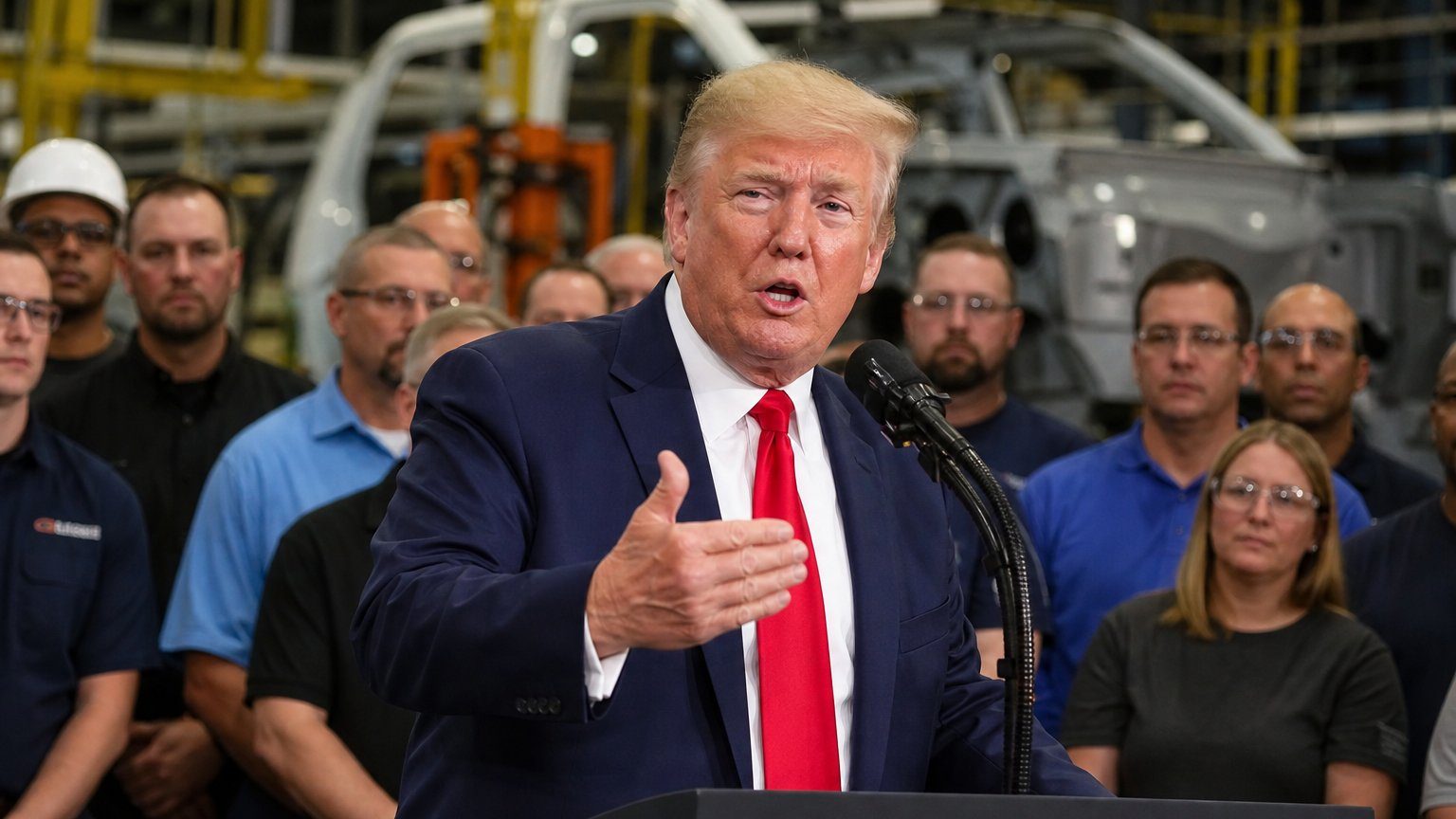
Trump defended his tariffs at a Michigan GM plant, arguing they are bringing auto work home even as the state’s job growth slows.

Trump defended tariffs at a Michigan GM plant on Monday, making the case that his trade policy is pushing automakers to bring work back to the United States. Speaking in Milford, President Donald Trump said his tariff program is helping revive the auto industry and encouraging companies to move overseas operations home.

Trump framed the policy as a direct incentive for companies that want access to the American market. He said firms that build trucks or cars outside the United States must pay a fee to sell them here, while vehicles made in Michigan or elsewhere in the country would face no tariff. The White House also pointed to General Motors’ investment in US manufacturing, along with smaller investments from Ford, Stellantis and Detroit Diesel, as evidence that the approach is producing results.

The president’s visit came at a time when Michigan’s economy is under pressure. Job growth in the state has slowed sharply, and officials say Michigan now has one of the highest unemployment rates in the country. Bureau of Labor Statistics data show the state added just 500 jobs in the 12 months through June, a weak pace compared with Texas, which added 177,900 over the same stretch. State figures put Michigan’s unemployment rate at 5.1% in May, slightly higher than in April.

The auto industry sits at the center of the fight. Michigan depends heavily on Canada, and Canadian-linked manufacturing has been hit by a range of US tariffs. Those include a 25% levy on non-US parts in Canadian-assembled passenger vehicles, along with parts that fall outside the current North American trade pact, known as USMCA. Steel tariffs also ripple through the industry. If Washington follows through on a planned increase to 50% on some Canadian goods, including autos, in August, the pressure would rise further.


Canada has already answered with 25% tariffs on US vehicles and parts that do not comply with USMCA. The tension matters because the auto supply chain crosses the border constantly, and neither side can easily escape the effects. That is especially true in Michigan, where the industry is central to jobs, local tax revenue and the wider manufacturing base.

Trump used the GM plant stop to cast his tariffs as a tool for American workers, praising them as part of what he called a broader comeback for the state. He also attacked what he described as “globalist” US politicians, blaming them for abandoning autoworkers. His message was aimed not just at the plant floor, but at a state that will remain politically important as the midterm elections approach in November.

The timing added another layer. Trump’s comments came as he stepped up rally-style appearances ahead of the election, and they landed on the same day the new Gordie Howe International Bridge opened between Detroit and Windsor. The first commercial truck to cross carried auto parts into Michigan, underscoring how tightly linked the two countries remain. For American readers, the story is about more than campaign rhetoric: it is a test of whether tariffs protect jobs at home or deepen the strain on the auto economy people rely on.

Frequently asked questions

Why did Trump visit the GM plant in Michigan?
He used the visit to defend his tariff policy and argue that it is helping revive the auto industry and bring work back to the United States.
What evidence did the White House point to in support of the tariff strategy?
It pointed to General Motors’ investment in U.S. manufacturing, along with smaller investments from Ford, Stellantis and Detroit Diesel.
How is Michigan’s economy doing?
The article says job growth has slowed sharply, with only 500 jobs added in the 12 months through June, and the state’s unemployment rate was 5.1% in May.
How have tariffs affected the auto industry across the U.S.-Canada border?
Michigan depends heavily on Canada, and tariffs have hit Canadian-linked manufacturing as well as parts and vehicles that move across the border. Canada has also imposed 25% tariffs on some U.S. vehicles and parts that do not comply with USMCA.

More from Politics

View all →
📨

Never Miss a Story

Get the headlines that matter delivered straight to your inbox.