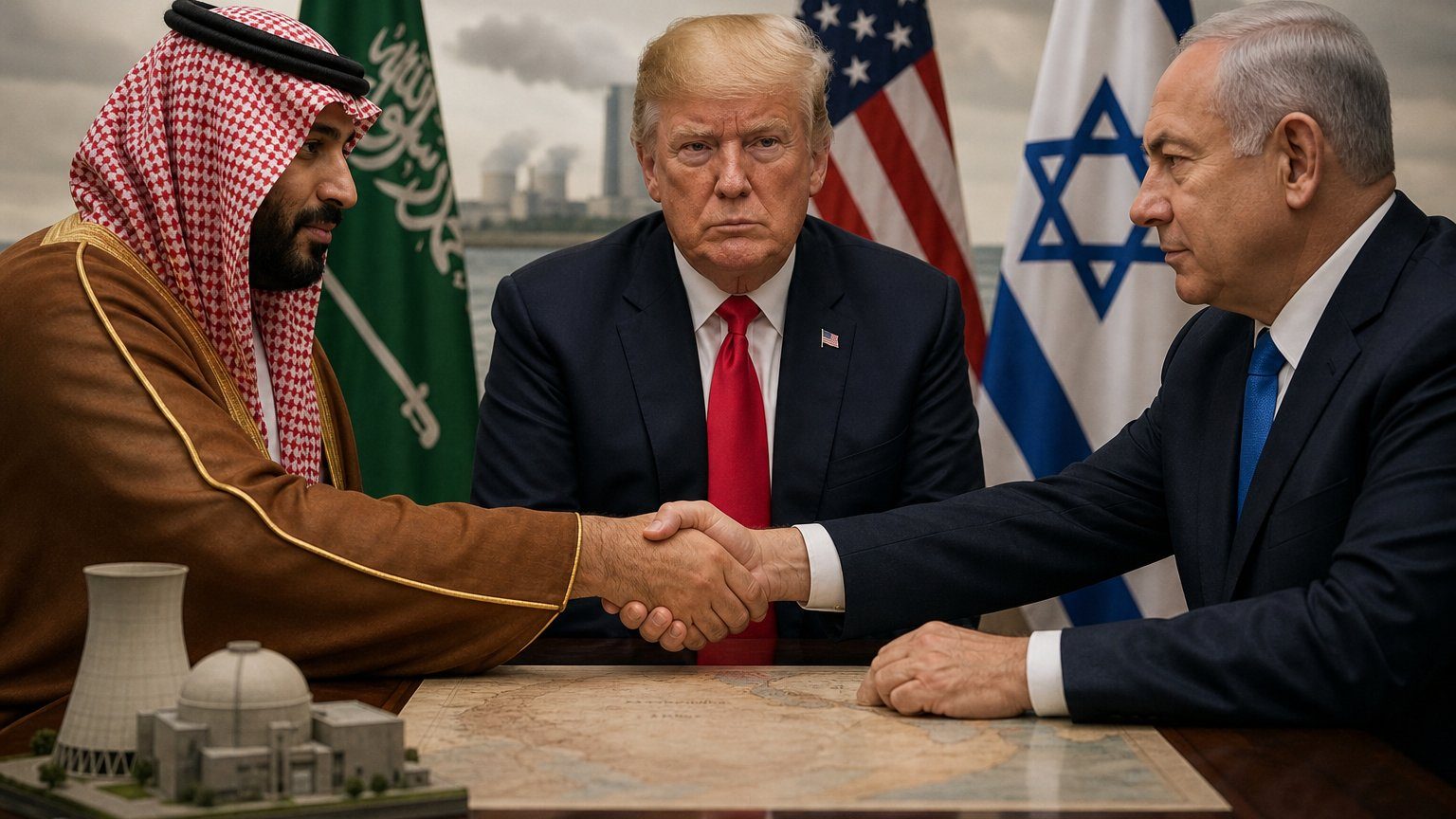
President Donald Trump has linked the Saudi nuclear deal to the kingdom’s recognition of Israel, saying the agreement will move forward only if Riyadh joins the Abraham Accords. The condition injects a major political test into a deal already drawing scrutiny over the risks of nuclear spread in the Middle East.
Posting on Truth Social, Trump said the civil nuclear agreement would be approved but only on the condition that Saudi Arabia signs onto the Abraham Accords. He also stressed that there would be no enrichment of material and said the arrangement would be for non-military use. The exact text of the Saudi nuclear deal has not been released, and it was not immediately clear whether the recognition requirement is written into the agreement or simply a condition the administration expects Saudi Arabia to accept.
White House press secretary Karoline Leavitt said Trump had raised the issue with Saudi leaders many times before. She said the president had made clear that if the Saudis do not join the Abraham Accords, the deal will not go ahead. Leavitt said the administration would keep talking with Saudi counterparts.
The Saudi nuclear deal was announced on Wednesday, and it quickly sparked pushback from experts worried about future proliferation in an already unstable region. Some Republican and Democratic lawmakers voiced similar concerns, though the president’s party controls both chambers of Congress and opponents do not appear to have the votes to stop the agreement. The US Department of Energy said the package includes a peaceful nuclear cooperation agreement and a bilateral safeguards agreement, and it described the arrangement as the legal basis for a decades-long, multi-billion-dollar partnership with economic and strategic goals, including nonproliferation. The department also said the agreement will be sent to Congress for review.
The International Atomic Energy Agency said it knew of US and Saudi plans for a bilateral civil nuclear cooperation agreement and a request for verification measures tied to it. The agency said it looked forward to receiving that request and working with both governments on enforcement. Its role will matter because the core fight here is not just diplomacy, but whether safeguards can keep peaceful nuclear energy from becoming a pathway to something far more dangerous.