Uganda’s Ebola response has kept cases low as the virus surges in eastern DR Congo, where the outbreak has now passed 1,500 deaths.
Uganda’s Ebola response has become a rare bright spot in a region still under strain, even as the Ebola outbreak in eastern Democratic Republic of Congo has pushed past 1,500 deaths. While officials in DR Congo say the virus is spreading faster than in earlier outbreaks, Uganda recently discharged its last Ebola patient, underscoring how preparation and quick action can change the outcome.
The contrast is sharp. DR Congo’s outbreak, declared in May, has grown into the second-worst on record, and experts believe the real death toll is higher than the official figure. In Uganda, health officials described a moment of relief when the last patient left hospital two weeks ago. The country recorded just 20 cases and two deaths, a result World Health Organization officials say came from planning, not chance.
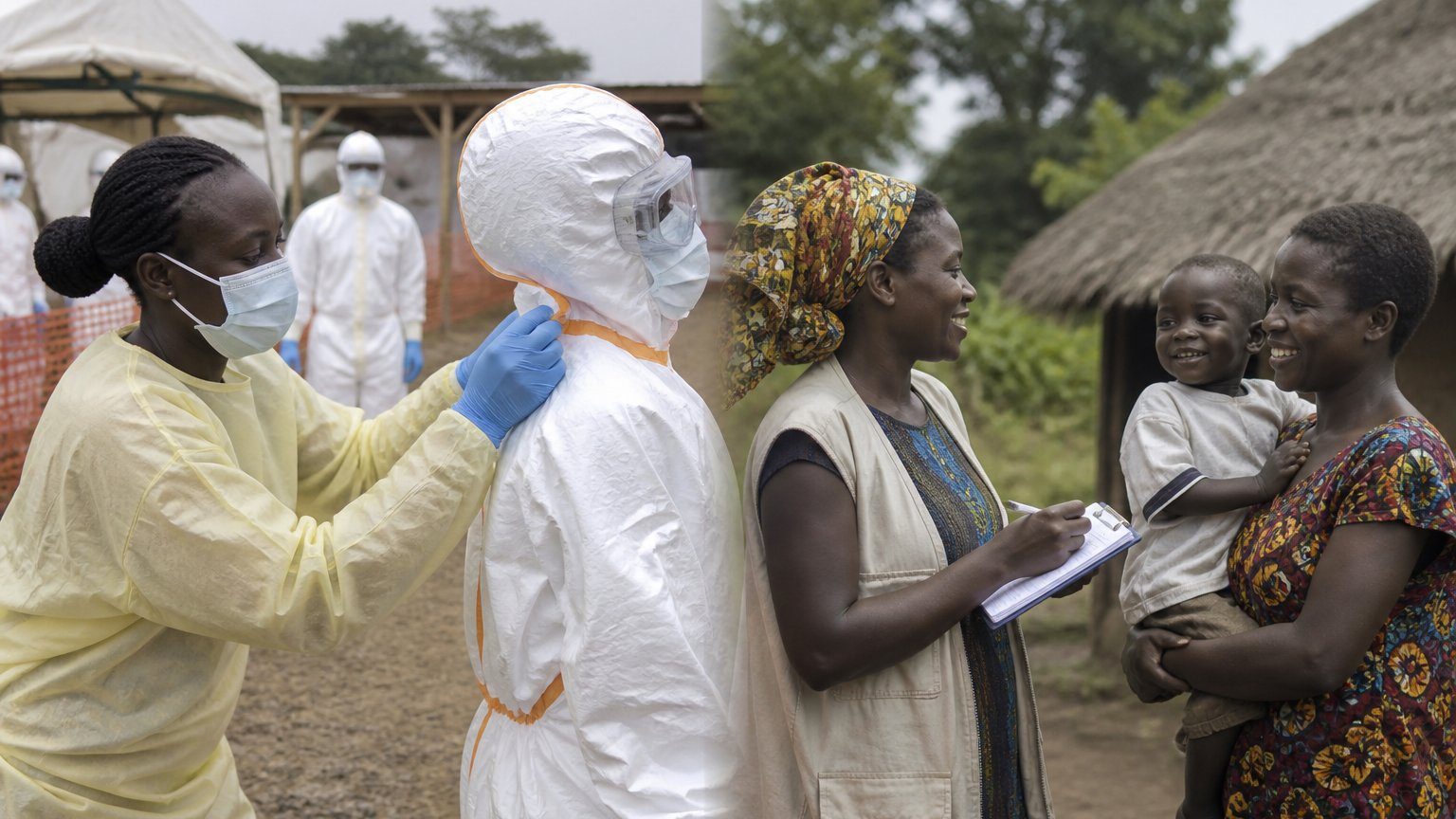
“It’s because people invested in preparedness,” Dr Kasonde Mwinga, the WHO’s Uganda chief, told the BBC. Uganda’s health teams had been through Ebola before, and that experience mattered. Officials there say repeated outbreaks since 2000 taught them how to move fast, isolate cases, protect medical staff and track contacts before the virus could spread widely through communities.
One example from 2011 still shapes the country’s response. A 12-year-old girl arrived at a hospital in Luwero with symptoms that raised suspicion. She was isolated, health workers used protective gear, and when she died hours later her body was sealed carefully in a coffin. A blood test later confirmed Ebola, but the precautions helped stop further spread. Government spokesperson Alan Kasujja said Uganda knows how to handle the disease because it has faced it before.
That same speed helped during the latest outbreak. Uganda’s first known case was a man who came from DR Congo for treatment. Once health authorities confirmed that several infections had been brought across the border, they activated a specialist Ebola treatment centre at Mulago hospital in Kampala. The facility had leftover supplies from a previous outbreak and an emergency team on standby, allowing staff to reopen quickly rather than start from zero.
“Uganda’s Ebola response has kept cases low as the virus surges in eastern DR Congo, where the outbreak has now passed 1,500 deaths.”
Dr David Kaggwa, who heads the centre, said the process mainly required sorting equipment and ordering a few more items before patients could be received. He also said people with symptoms went straight to the treatment unit after the outbreak was declared on 15 May, limiting contact with general hospital patients and staff. Out of the 20 people who tested positive in Uganda, 15 had come from DR Congo.
Uganda also moved to cut off transmission chains by quarantining more than 6,000 contacts for the full 21-day incubation period. Kasujja said the country’s success came down to speed and complete follow-up, while Dr Kaggwa said the first cases may not have recognized what they had. Once the danger was public, he said, surveillance made it easier to find patients quickly. Authorities also closed the border with DR Congo, even though that step carried financial pain for Ugandans who trade across it.
DR Congo has faced a far harder fight. Health workers there were dealing with an outbreak that had already gone undetected for weeks before officials identified the rare Bundibugyo strain behind it. Field investigator Dr Moubarack Kano said surveillance had been held back by poor planning, logistical problems and inexperienced staff, telling Reuters, “We discover the disease only after it has already spread. We’re just chasing it.” The situation is made more difficult by insecurity in eastern DR Congo, where armed groups, displacement, artisanal mining and cross-border movement all complicate contact tracing and containment. Uganda’s public health success now depends in part on what happens next door: if DR Congo cannot get ahead of Ebola, the border keeps the threat alive for both countries.
Uganda’s experience shows that outbreak control is not just about hospitals and medicine. It depends on trust, discipline and public cooperation, backed by a government willing to act early. With screening still tightened at the border and health workers sent to help in DR Congo, the message is clear for Americans watching global health threats: fast containment at the source is often the best defense for everyone.
Frequently asked questions
How severe was Uganda’s Ebola outbreak compared with DR Congo’s?
Uganda recorded 20 cases and two deaths and has discharged its last patient. DR Congo’s outbreak has passed 1,500 deaths and is described as the second-worst on record.
What helped Uganda control Ebola quickly?
Officials said Uganda’s success came from preparedness, rapid isolation, protective gear, contact tracing, quarantining more than 6,000 contacts, and using an Ebola treatment center that could reopen quickly.
Where did Uganda’s first known Ebola case come from?
Uganda’s first known case was a man who came from DR Congo for treatment. Out of Uganda’s 20 positive cases, 15 had come from DR Congo.
Why has DR Congo struggled to contain the outbreak?
The article says the outbreak went undetected for weeks, and response efforts have been hampered by poor planning, logistical problems, inexperienced staff, insecurity, displacement, artisanal mining, and cross-border movement.
We value your privacy 🍪We use cookies for essential features and, if you allow it, to send you a notification whenever we publish a new story. See our Privacy Policy.
📨
Never Miss a Story
Get the headlines that matter delivered straight to your inbox.
📱 On iPhone: tap the Share icon, choose “Add to Home Screen”, then open TheTrueDefender from your Home Screen and tap 🔔 to turn on notifications. (Apple only allows notifications for saved web apps.)
📱 Add TheTrueDefender to your home screen for one-tap access.