Ukraine’s oil refinery strikes reached deep into Russian territory this week, with President Volodymyr Zelensky saying the attacks hit two major refineries and several vessels in the Black Sea. The Ukrainian leader said the operations were aimed at reducing the oil income Moscow uses to finance its war.
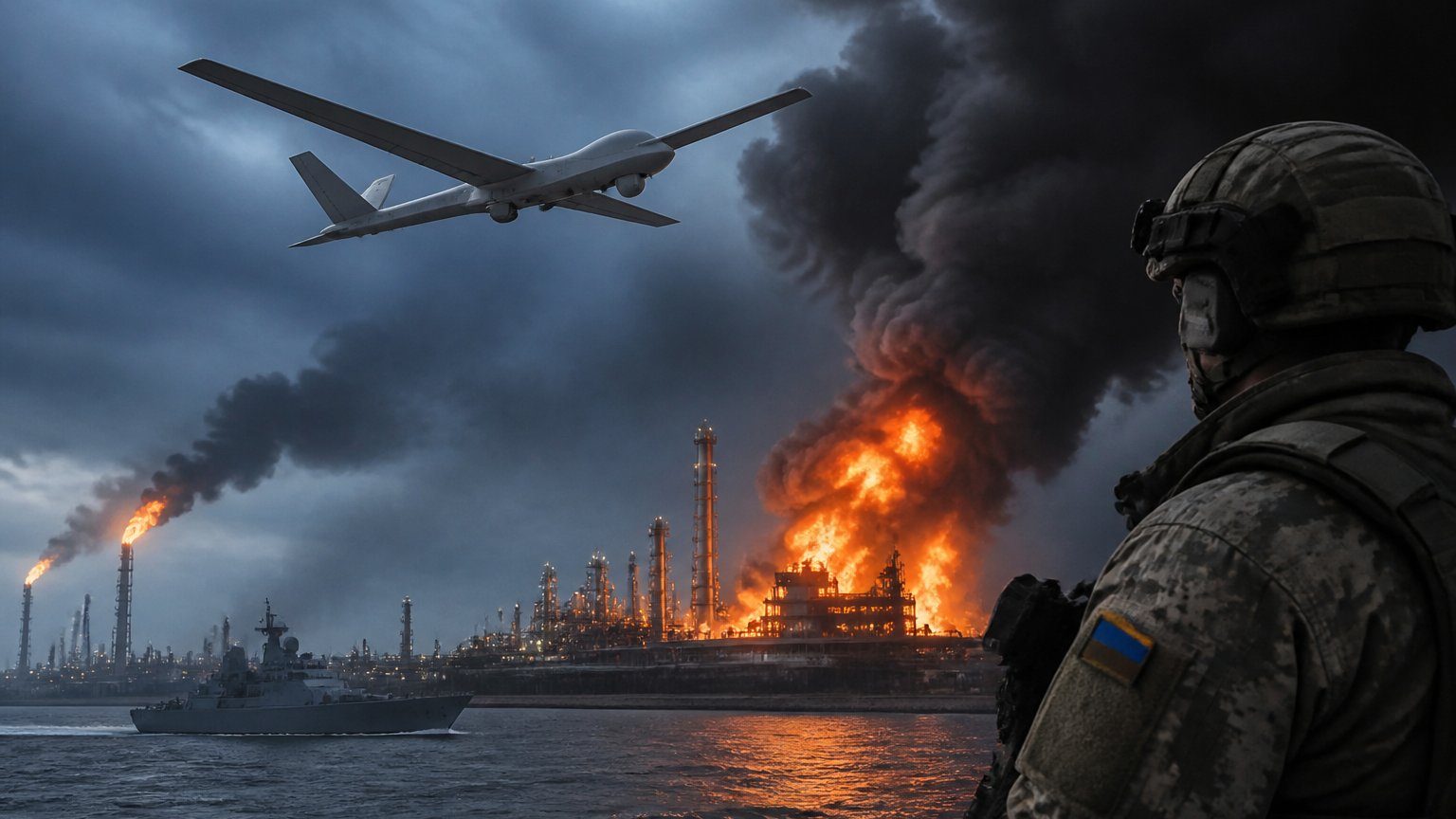
Zelensky said the Bashneft-Novoil refinery in Russia’s Bashkortostan republic and the Slavneft-Nyanos refinery in the Yaroslavl region were struck. He said the Bashneft-Novoil site was about 1,300 kilometers from the Ukrainian border, while Slavneft-Nyanos was nearly 700 kilometers away. He also said two military patrol boats and shadow fleet vessels were hit in the Black Sea, a reference to tankers used to move sanctioned Russian oil.
Officials in Yaroslavl said the Slavneft-Nyanos refinery caught fire after what the regional governor, Mikhail Evraev, described as the “largest enemy drone attack.” He said four people were injured. Evraev also said 93 drones were shot down over the region overnight and that falling debris struck the refinery’s storage tanks. Emergency crews were working to put out the blaze, while verified photos and videos circulating online showed thick smoke and several fires at the site.
Ukraine said the refinery assault was only one part of a broader overnight exchange that also brought more loss on its own territory. The country said at least 11 people were killed in Russian attacks, and Kherson reported a full blackout after what officials called a strike on critical infrastructure. In the town of Balakliya in the Kharkiv region, three people were killed in a drone attack on private homes, according to the state emergencies service. Later, regional officials said two more people were killed when drones hit the train station in Lozova, and eight people were wounded.
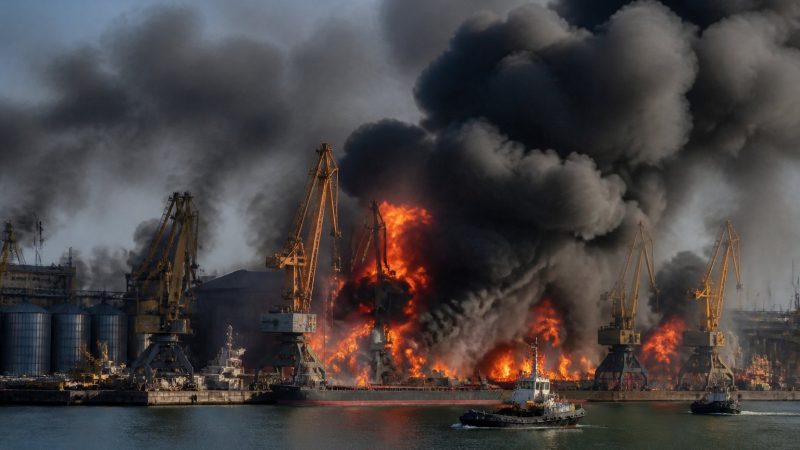
Russian strikes also hit the central Dnipropetrovsk region, where local officials said five people were killed. In Odesa, one person was killed when Russia struck two dry cargo ships in the Black Sea port. Ukraine said its forces were under pressure across multiple regions as the attacks spread from the front lines to energy and transport sites well behind them.