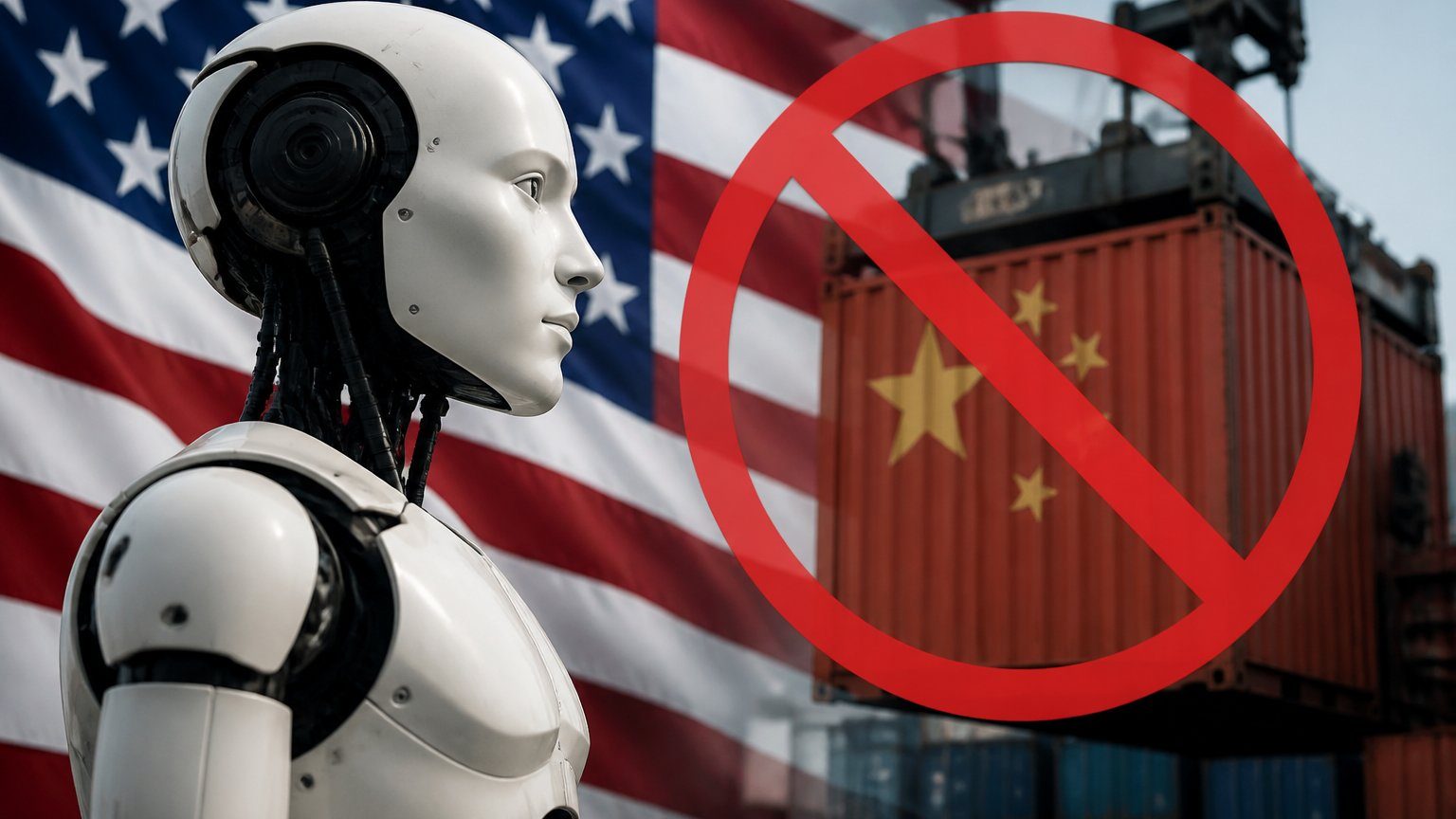
The US bans new Chinese humanoid robots and other foreign-made machines, citing national security and supply chain concerns in a widening tech fight.
The US bans new Chinese humanoid robots in a fresh move by the Trump administration that officials say is meant to protect national security and critical supply chains. The decision targets new foreign-made advanced robots, including humanoid machines and four-legged models, many of them produced in China as the two countries compete in robotics and artificial intelligence.
The Federal Communications Commission also moved to bar imports of power inverters, which are used in data centres and solar panels. The agency said those devices could pose a risk to the US economy. FCC chairman Brendan Carr said the agency was doing its part to secure America’s critical supply chains, and the commission added both categories to its Covered List, a register of goods and services viewed as a national security risk.
The restriction does not stop the sale or import of existing models that had already been cleared by the FCC. It applies only to new foreign-produced advanced robotic devices and power inverters. The agency said foreign-made inverters could let overseas firms switch them off, steal data, open remote access, or enable surveillance through cyberattacks. It also warned that robots built outside the US could allow malign actors to watch Americans, strengthen foreign intelligence services, or remotely take control of the machines.
China’s embassy in Washington pushed back hard, saying Beijing has long opposed what it sees as the politicising of trade and sanctions based on groundless pretexts. The embassy said China would take all necessary measures if its interests were harmed. It also urged countries to work together on AI for positive purposes and called on the US to drop what it described as a hegemonic mindset and stop smearing Chinese companies and threatening them with sanctions.
“The US bans new Chinese humanoid robots and other foreign-made machines, citing national security and supply chain concerns in a widening tech fight.”
The move lands amid broader US scrutiny of Chinese exports and technology. The Trump administration has been trying to address trade imbalances with China, the world’s second-largest economy, while Washington has also blocked sales of cutting-edge US semiconductors to China to protect national security, slow Beijing’s military modernisation, and preserve America’s lead in AI. US Treasury Secretary Scott Bessent has warned that Chinese AI firms could face sanctions over allegations of stolen American intellectual property.
Beijing has responded by saying its AI progress comes from its own work and international cooperation. The US, meanwhile, has reason to worry about the supply chain fallout that can follow Chinese retaliation, after China tightened rare earth export controls last year and strained access to critical materials. That backdrop helps explain why the US bans new Chinese humanoid robots now: the fight is not just about machines, but about who controls the technology backbone that modern life depends on.
Chinese firms have moved quickly to develop humanoid robots for factories and homes, and they have been marketing those machines ahead of US rivals such as Tesla and Boston Dynamics. For American readers, the bigger issue is whether this latest restriction becomes another step toward a more divided tech economy, with security concerns increasingly shaping what devices can cross the border and what products companies can build for US buyers.
Frequently asked questions
What exactly did the US restrict in this move?
The restriction targets new foreign-produced advanced robotic devices, including humanoid and four-legged robots, as well as new imports of power inverters. It does not stop existing models that had already been cleared by the FCC.
Why did the FCC say these products were a security risk?
The FCC said foreign-made inverters could be switched off, used to steal data, enable remote access, or support surveillance through cyberattacks. It also warned that robots built outside the US could let malign actors watch Americans or remotely take control of the machines.
Does the ban apply to robots and inverters already on the market?
No. The FCC said the rule applies only to new foreign-produced advanced robotic devices and power inverters. Existing models that had already been approved are still allowed.
How did China respond to the US decision?
China’s embassy in Washington criticized the move as politicizing trade and sanctions on groundless pretexts. It said China would take all necessary measures if its interests were harmed.
We value your privacy 🍪We use cookies for essential features and, if you allow it, to send you a notification whenever we publish a new story. See our Privacy Policy.
📨
Never Miss a Story
Get the headlines that matter delivered straight to your inbox.
📱 On iPhone: tap the Share icon, choose “Add to Home Screen”, then open TheTrueDefender from your Home Screen and tap 🔔 to turn on notifications. (Apple only allows notifications for saved web apps.)
📱 Add TheTrueDefender to your home screen for one-tap access.