West Bank mosque attacks spread to villages near Qusra and Kour after deadly clashes days earlier, as Palestinian officials report fresh settler violence.
West Bank mosque attacks have widened the unrest in the occupied territory, with Palestinian officials saying Israeli settlers set fire to two mosques, along with cars and agricultural land, in attacks that struck villages near Qusra and Kour. The incidents came as the West Bank was already on edge after deadly clashes days earlier near the village of Tal.
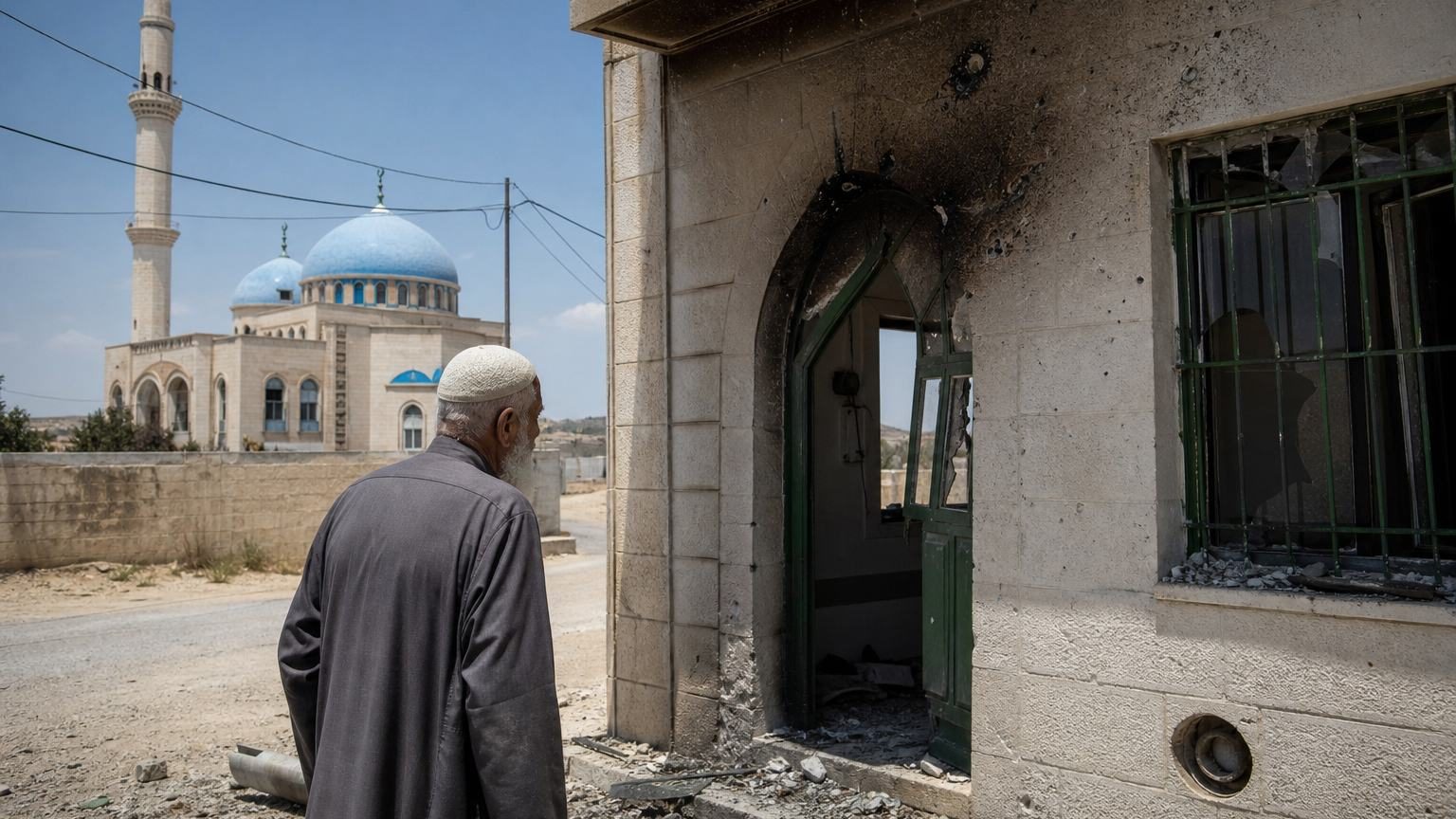
Palestinian reports say the overnight attacks left cars vandalised, property stolen, and hate graffiti sprayed on walls in two villages. In Qusra, the mayor said settlers burned a mosque that was still under construction. Abdul Azim Wadi said the graffiti on the building included the word “revenge.” In a separate incident, Palestinian officials said settlers set another mosque on fire in Kour and painted slogans on its walls.
The violence follows a confrontation near Tal that left four Palestinians and two Israelis dead. That clash has sharply raised tensions across the West Bank, where Palestinian officials say attacks by extremist settlers have been growing. They say the violence has been encouraged by far-right elements in Israel’s current government, while Israeli leaders have publicly condemned extremist attacks.
Israel’s military said troops were sent to Qusra and that police would investigate and gather evidence. It also said on Sunday that it was trying to prevent what it called “incidents of nationalist crime,” the term it uses for attacks by extremist Israeli settlers. At the same time, the Israel Defense Forces carried out raids and arrested more than one hundred and thirty people over the weekend in what it described as a counter-terrorism operation.
In response to the killings in Tal, Prime Minister Benjamin Netanyahu said he would take “powerful action.” That includes the possible demolition of the homes of two Palestinians who were allegedly involved. He also said he would speed up the establishment and legalisation of farm outposts in the West Bank, a move that fits a wider pattern of settlement expansion even as violence continues to rise.
“West Bank mosque attacks spread to villages near Qusra and Kour after deadly clashes days earlier, as Palestinian officials report fresh settler violence.”
Eyewitness accounts from nearby Sarra show how quickly the situation can turn. Hanan Turabi, speaking to the BBC in tears beside her home, said settlers torched one of six buildings attacked there that day, while more than a dozen other buildings were hit with stones. Neighbours were seen clearing blackened water and ash as burned furniture was loaded onto a truck outside. Turabi said she stayed in her house until the last possible moment before fleeing with four children.
Her relative, Kaied Ahmad Turabi, who had been visiting family in the village, said he was attacked after leaving hospital with injuries that included a black eye, cuts, bruises, and a head wound that he said required twelve stitches. He said the men who came toward the village were masked and appeared prepared, carrying sticks and other items. Later, residents gathered to defend the village as soldiers separated Palestinians and settlers, with tear gas used to push residents back.
The wider background is clear: the West Bank has seen rising violence for months, and the trend has only worsened since the Hamas-led attacks on Israel on October seven, twenty twenty-three, and the war that followed in Gaza. The UN says one thousand one hundred fourteen Palestinians have been killed in the West Bank since then, most of them by the IDF, while at least thirty-five of those deaths involved settler attacks. It also says forty-one Israelis, including civilians and security personnel, have been killed in Palestinian attacks or during Israeli military operations in the territory. For Americans watching the region, the West Bank mosque attacks matter because they show how fast local violence can spill into a broader cycle that complicates any path to stability.
Frequently asked questions
What did Palestinian officials say happened to the mosques in Qusra and Kour?
They said settlers set fire to two mosques, one in Qusra and another in Kour. In Qusra, the mayor said the mosque was still under construction and had “revenge” graffiti on it.
What other damage was reported in the overnight attacks?
Officials said cars were vandalised, property was stolen, agricultural land was attacked, and hate graffiti was sprayed on walls in two villages.
Why was the West Bank already tense before these mosque attacks?
The attacks came after deadly clashes near Tal that left four Palestinians and two Israelis dead. That confrontation sharply raised tensions across the West Bank.
How did Israeli authorities respond?
The military said troops were sent to Qusra and police would investigate and gather evidence. It also said it was trying to prevent “incidents of nationalist crime,” while the IDF carried out raids and arrested more than 130 people over the weekend.
We value your privacy 🍪We use cookies for essential features and, if you allow it, to send you a notification whenever we publish a new story. See our Privacy Policy.
📨
Never Miss a Story
Get the headlines that matter delivered straight to your inbox.
📱 On iPhone: tap the Share icon, choose “Add to Home Screen”, then open TheTrueDefender from your Home Screen and tap 🔔 to turn on notifications. (Apple only allows notifications for saved web apps.)
📱 Add TheTrueDefender to your home screen for one-tap access.