West Bank settler violence is surging as Havat Gilad residents and nearby Palestinians face rising hostility and fear after a deadly confrontation.
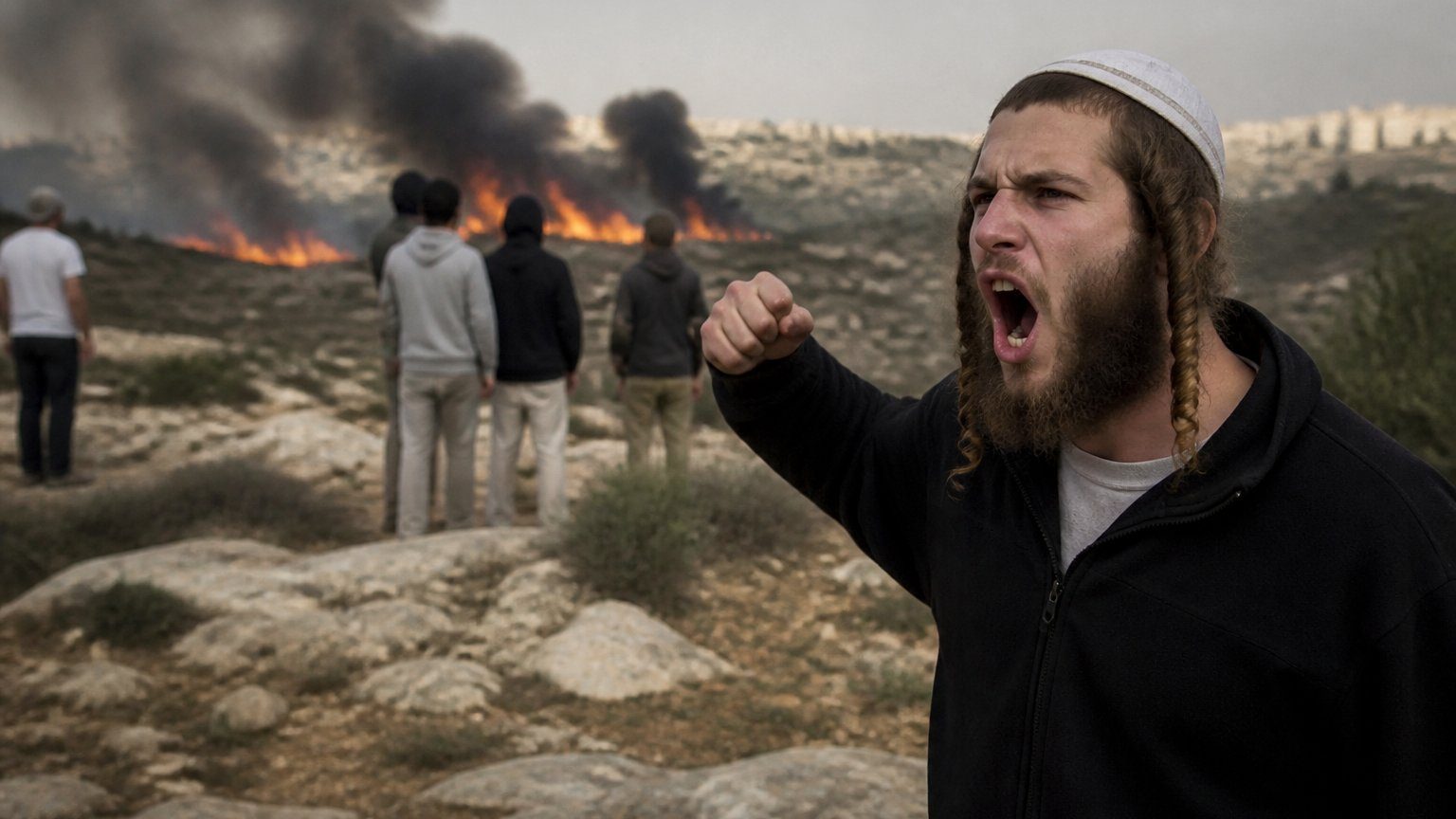
A West Bank settler violence dispute has sharpened after a BBC visit to Havat Gilad, where one resident openly defended attacks on Palestinian villages as revenge for the killing of an Israeli security guard. The comments came after a deadly confrontation last Friday in the nearby village of Tal, an incident that set off a wave of settler assaults in the area.
Yehuda Shimon, a lawyer who works with an organization representing Israelis arrested for violence against Palestinians, said the attacks on Palestinian villages were justified. He named nearby villages and said the response should be far harsher than the loss of one Israeli life. When challenged on the racist nature of his remarks, he did not reject that description. He said, instead, that the statement reflected a divine truth and that Jews had been chosen by God.
The confrontation that triggered the latest unrest remains disputed. The BBC account says one Israeli security guard from Havat Gilad was killed, along with four Palestinians and an Israeli soldier. The violence has become part of a wider pattern that many Palestinians and outside monitors say is worsening as settlements and unauthorized outposts continue to spread across the occupied West Bank.
Havat Gilad sits deep inside the territory on several hilltops, with simple homes and sheds visible from nearby Palestinian villages. It was established more than 20 years ago in memory of an Israeli security officer killed by Palestinians. Today it is a loosely scattered outpost, and like other Israeli settlements and outposts in the West Bank, it is considered illegal under international law. The Israeli government has said it would legalize Havat Gilad, but Peace Now, the Israeli group that tracks settlement activity, says much of the land is recognized by Israel as privately owned by Palestinians and that the state has instead designated nearby land to allow further building.
Shimon dismissed those legal objections. He said international law did not matter because the Bible gave Jews the right to the land. He also blamed Israel’s government and army for not doing enough to assert Jewish claims, even though settlements and outposts have expanded significantly under the current Israeli government. He argued that the army should use deadly force more often against Palestinians during clashes with settlers, saying the current approach only invites more violence.
“West Bank settler violence is surging as Havat Gilad residents and nearby Palestinians face rising hostility and fear after a deadly confrontation.”
His remarks stand in stark contrast to the numbers recorded by the UN Office for the Co-ordination of Humanitarian Affairs. OCHA says sixty-four Palestinians were killed in the West Bank from the start of the year through July 20, including eighteen during settler attacks. It says at least twelve of those deaths were caused by settlers, three by Israeli forces, and three more remain unclear. Over the same period, one Israeli was killed. OCHA also says injuries caused by settlers have risen sharply to more than three per day this year.
The broader backdrop is a territory Israel occupied in the 1967 Middle East war and has since filled with hundreds of settlements and outposts housing more than half a million Jews. Israeli settlers live under civilian law and move freely, while Palestinians are under military occupation, military courts, checkpoints and road closures. Human rights groups have described that system as apartheid. Shimon went further still, saying Palestinians in the West Bank had only three choices: accept Israeli rule, leave voluntarily, or be killed if they would not make peace and would not go.
His comments echo the hard-line vision of Finance Minister Bezalel Smotrich, who outlined a plan in a 2017 blueprint for Palestinians to give up any push for statehood and live quietly under Israeli rule, with those unwilling to do so leaving the territory or facing deadly force if they continued armed struggle. More recently, Smotrich has pushed for what he calls voluntary migration of Palestinians from Gaza and the resettlement of Israelis there, and has described Palestinian identity as an invention.
For Americans watching from afar, the West Bank violence is another reminder that the Israeli-Palestinian conflict is not frozen, but moving in a more volatile direction on the ground. What happens next will affect not only the people living beside Havat Gilad, but also the wider debate over settlement expansion, security, and whether any political path remains open. The plain truth is that when settlements grow and revenge becomes normal talk, the chances for peace shrink and the risk to ordinary civilians grows.
Frequently asked questions
What did Yehuda Shimon say about attacks on Palestinian villages?
He said the attacks were justified and should be harsher than the loss of one Israeli life. When challenged, he did not reject racist characterizations of his remarks.
What triggered the latest wave of violence?
The unrest followed a deadly confrontation last Friday in the nearby village of Tal. The BBC account says one Israeli security guard, four Palestinians, and one Israeli soldier were killed.
What does the article say about Havat Gilad's legal status?
It says Havat Gilad is considered illegal under international law like other Israeli settlements and outposts in the West Bank. Israel has said it would legalize the outpost.
What do UN figures say about West Bank deaths and injuries this year?
OCHA says 64 Palestinians were killed in the West Bank from the start of the year through July 20, including 18 during settler attacks. It also says injuries caused by settlers have risen to more than three per day this year.
We value your privacy 🍪We use cookies for essential features and, if you allow it, to send you a notification whenever we publish a new story. See our Privacy Policy.
📨
Never Miss a Story
Get the headlines that matter delivered straight to your inbox.
📱 On iPhone: tap the Share icon, choose “Add to Home Screen”, then open TheTrueDefender from your Home Screen and tap 🔔 to turn on notifications. (Apple only allows notifications for saved web apps.)
📱 Add TheTrueDefender to your home screen for one-tap access.