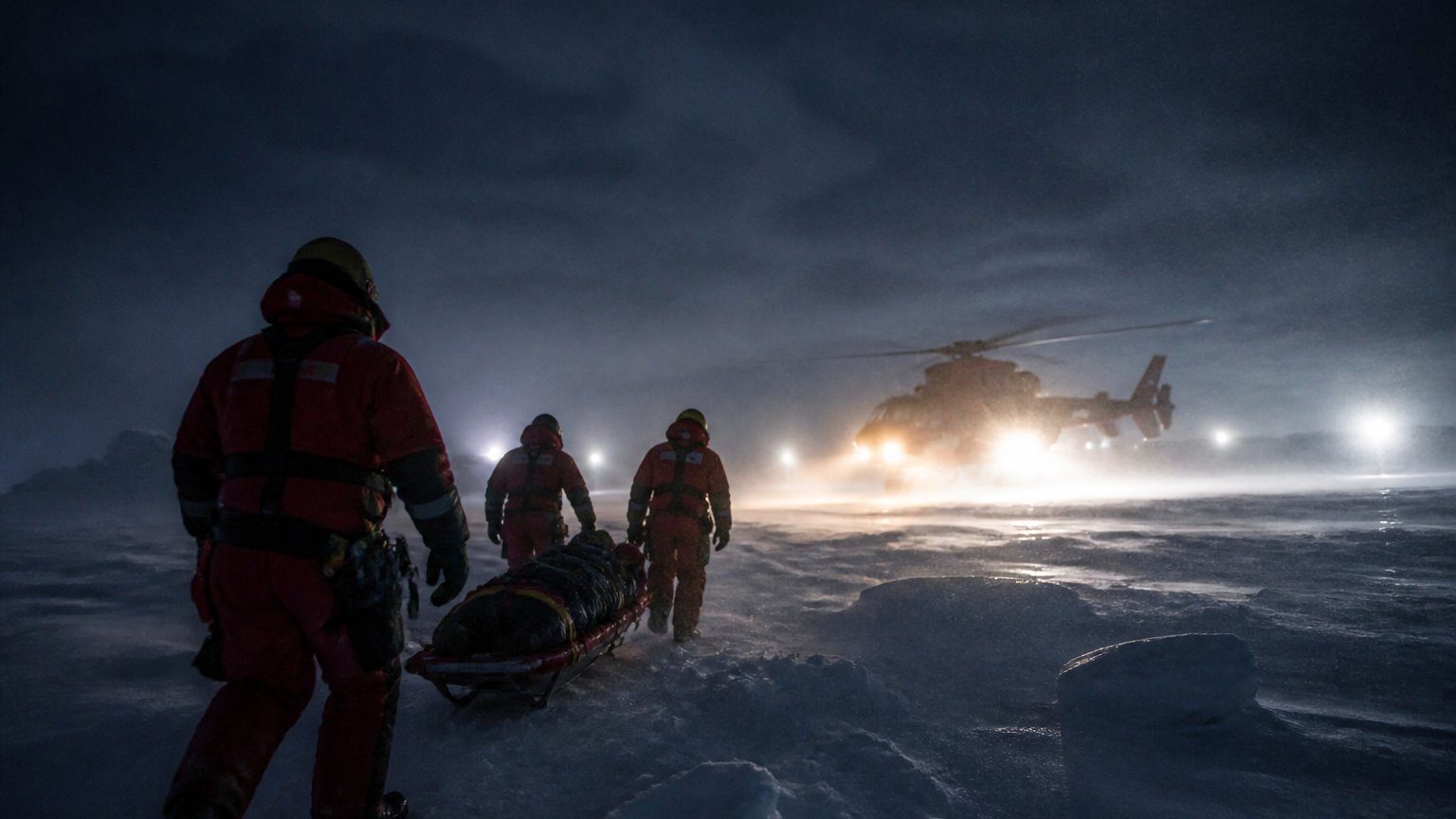
An Antarctica rescue from McMurdo Station turned into a punishing midwinter test for an Australian aviation crew last Friday, when pilots flew into total darkness, bitter cold and heavy weather to evacuate a US expedition member.
Skytraders described the mission as extraordinary after it received an urgent request for a medical evacuation through the US Antarctic Program and the Australian Antarctic Division. The company said its Airbus A319, known as Snowbird 1, eventually landed in conditions it called extremely challenging, with temperatures reaching minus 43C. The patient was transferred safely onto the aircraft and flown on to Christchurch, New Zealand, where treatment was provided. The person is now recovering well.
Captain Louise Robertson, one of four pilots aboard the flight from Hobart, said the operation was believed to be the first of its kind to take place in July and be completed in complete darkness. She said the flight was finished on 31 July, just before the first faint daylight of 1 August. Her husband, Rod Robertson, was the pilot who brought the plane down at the US research station on Ross Island.
Robertson said she and her husband sat in the right and left seats, respectively, during what she described as the most complex job she has handled in seven years with Skytraders and 25 years as a pilot. The aircraft had to be reconfigured to carry the patient, including fitting a stretcher in the rear cabin. Engineers and a design team completed that work in 24 hours. The crew then waited another 12 hours for a weather window, after an earlier delay.
The mission was pushed back when a snowstorm hit the region and kept station staff from reaching the runway. The runway at McMurdo, made of compacted snow, also had to be graded and groomed before the aircraft could use it. Robertson said the job took six hours and left the crew working with a narrow schedule to make the flight happen.