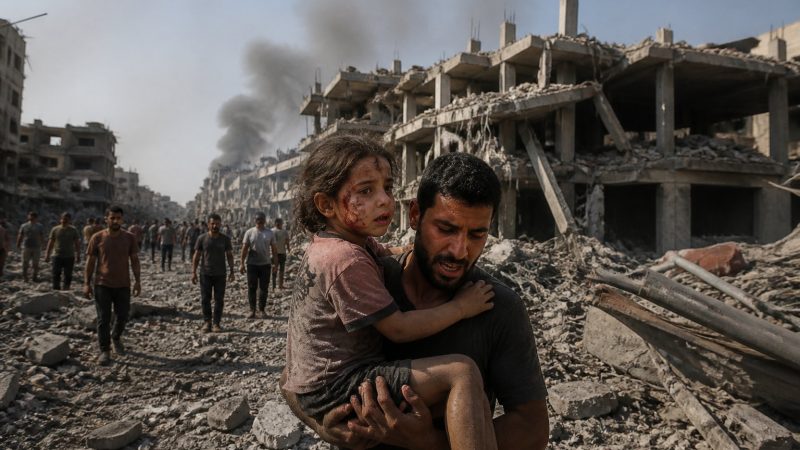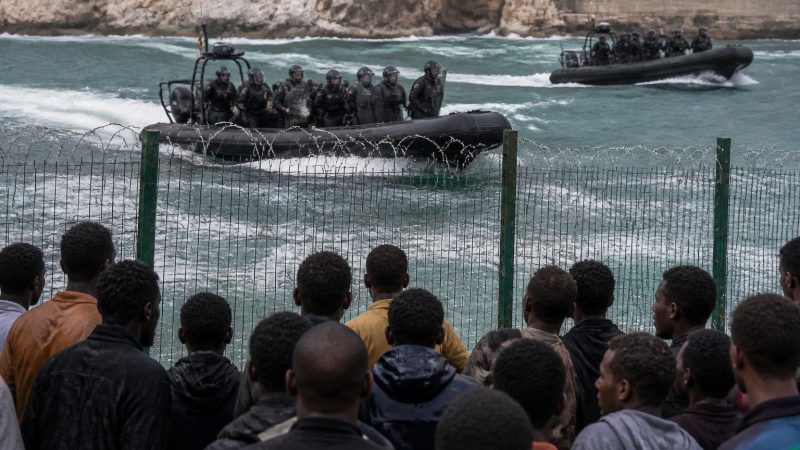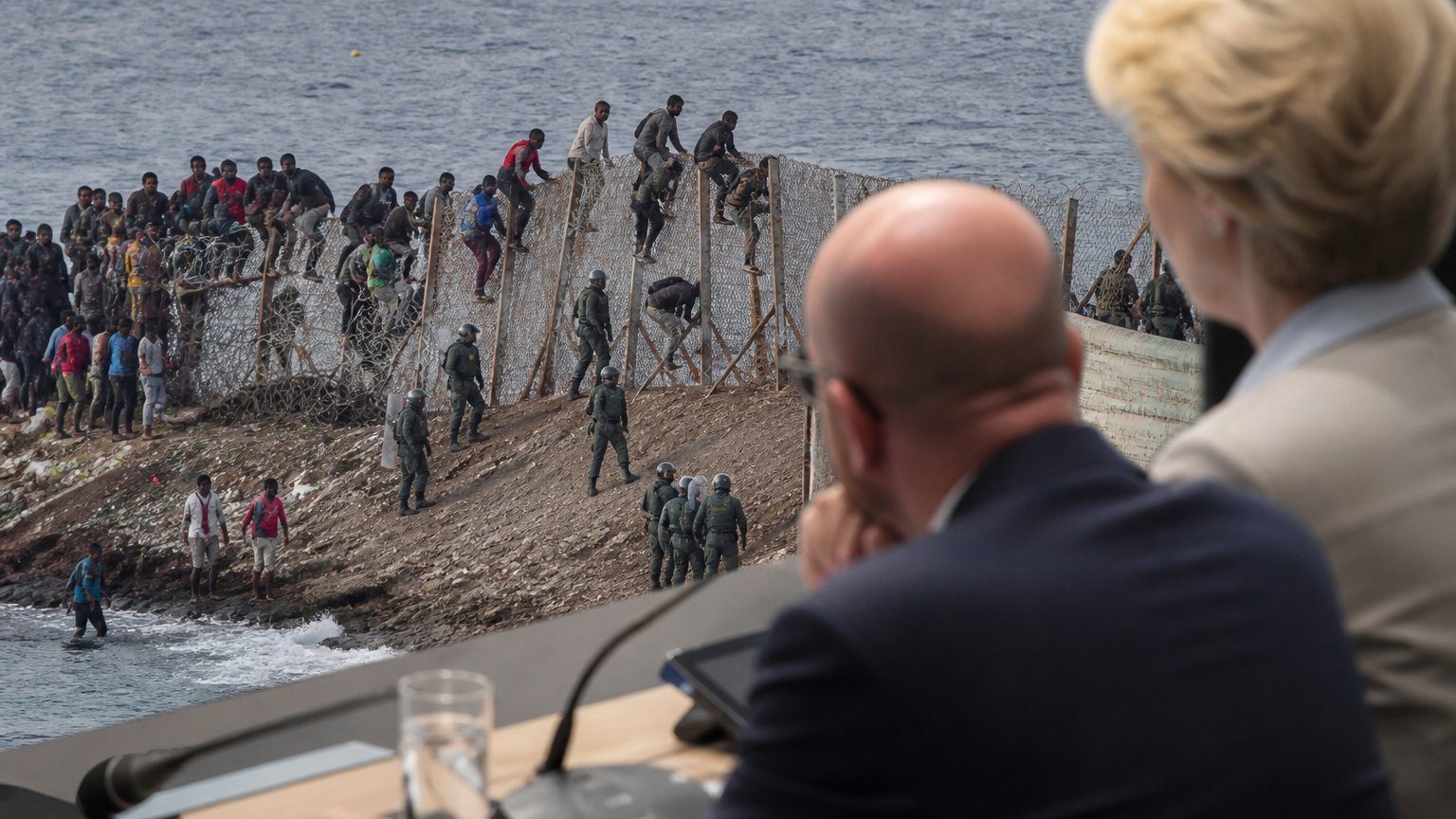
The Ceuta migrant crossings have triggered emergency talks at the European Union after a fierce dispute broke out between Spain and several other member states over how to respond to the surge. EU officials are set to meet Tuesday as pressure builds for a coordinated answer to the migration crisis in the Spanish enclave, where tens of thousands of migrants entered from Morocco.
The debate has quickly widened beyond Spain’s border problem. Twenty-two member states signed a joint letter pressing for stronger action on the bloc’s external borders and more coordination among capitals. The letter warns about what it calls hybrid threats that create the impression that illegal entry into the European Union is possible, saying that such a perception could encourage more attempts and weaken confidence in the common migration policy. Leaders including those of the Netherlands, Finland and Belgium signed the appeal, which was addressed to EU President Antonio Costa, European Commission President Ursula von der Leyen and Taoiseach Michael Martin, with Ireland currently holding the Council of the European Union presidency.
Spain pushed back hard against the criticism. In a separate letter to von der Leyen, Prime Minister Pedro Sánchez said he had serious concerns about the approach taken by some European governments. He said Spain had regained control of the border and stopped any unauthorized movement toward continental Europe in less than 48 hours. Sánchez also accused some governments of attacking Spain out of prejudice, misinformation, ignorance or political interest. He noted that Ceuta is not part of the Schengen area, the European travel zone that removes routine border checks across much of the continent.
Italy’s decision to suspend its Schengen arrangement with Spain for a month deepened the dispute, and Finland and Denmark backed that move. Other governments are weighing similar steps. Finland, France and Portugal have all said they are looking at or considering border checks, while Danish Prime Minister Mette Frederiksen urged the bloc to consider every option, including a suspension of Schengen cooperation. The argument has now become not only about Ceuta, but about whether the EU’s open-border system can absorb a crisis at one of its most sensitive edges.