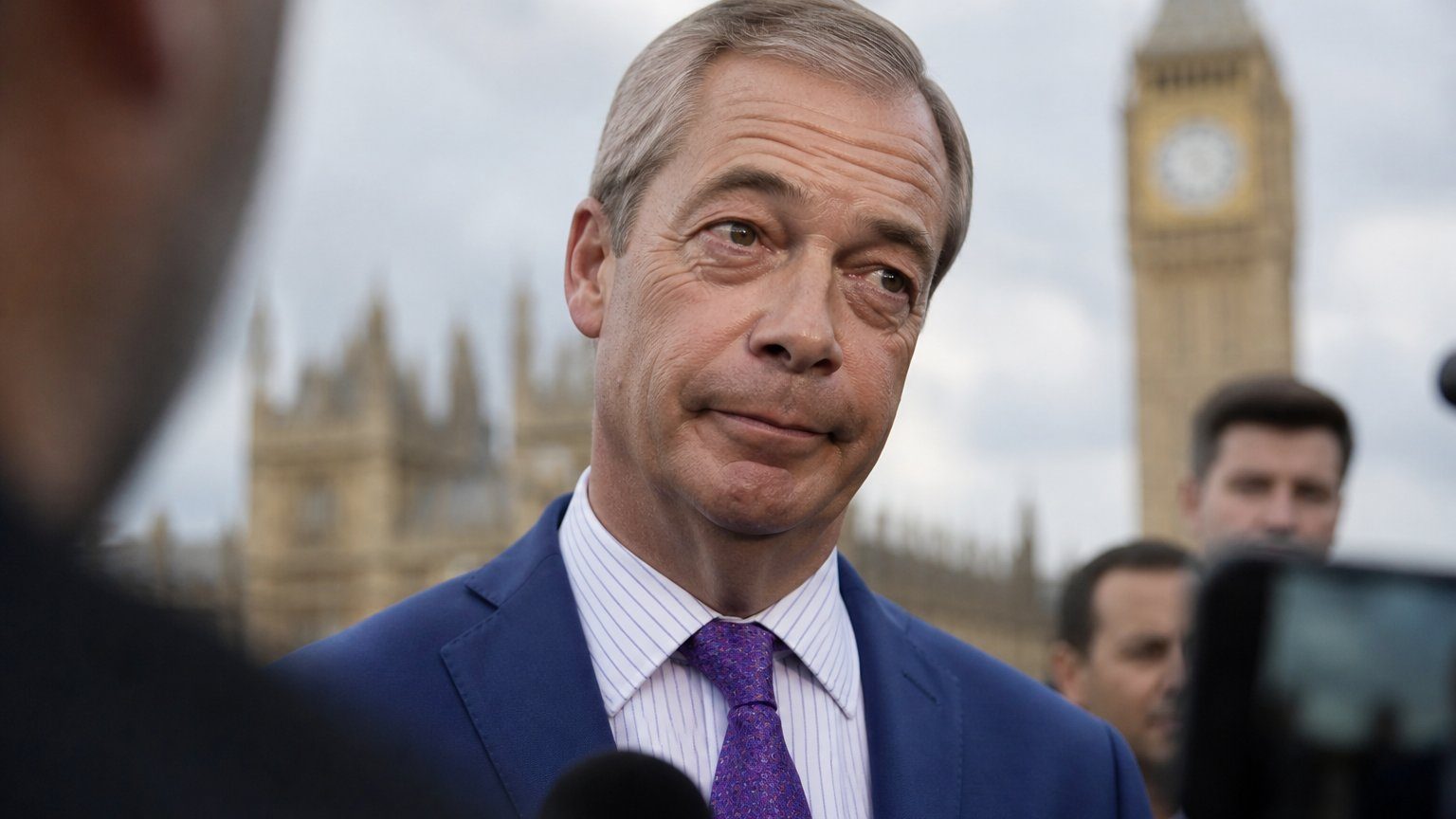
Nigel Farage has defended the timing of a £5m gift disclosure row, telling the BBC he discussed the risks and liabilities of returning to politics before the 2024 general election. The Reform UK figure said the conversations with then-party leader Richard Tice were about what would happen to the party’s finances if he came back, but he insisted there was no binding arrangement.
The dispute sharpened after The Sunday Times reported that Farage had negotiated a deal in March and April 2024 to return and lead Reform. Farage said he spoke with Tice in the spring of 2024 to work out the financial consequences of a possible comeback, but said it “wasn’t a deal” and “wasn’t an agreement.” He also said those talks came “quite some time after” he received the £5m gift from billionaire donor Christopher Harborne.
Farage has repeatedly described the payment as an unconditional personal gift intended for his security, and has said it was not political in nature. He has argued that he was not an MP when he received the money and therefore did not need to declare it in Parliament’s register of interests after winning his seat in July 2024. Reform’s opponents say the gift should have been entered once he became a member of the Commons.
Labour seized on his latest remarks, with party chair Bridget Phillipson saying he had “blown a gaping hole” in his explanation for why the payment was not declared. The political fight now centers on whether the timing and purpose of the donation place it inside the Commons code of conduct, which requires new MPs to register current financial interests and benefits received in the 12 months before election within one month of taking office.
The standards rules also say that gifts with personal motives may not need to be registered in some cases, but they add that both the giver’s possible motive and the use of the gift should be weighed carefully. If there is doubt, the benefit should be registered. That language leaves room for argument, which is why the Farage case has become more than a private funding dispute: it is now a test of how Parliament treats high-value gifts tied to public office.