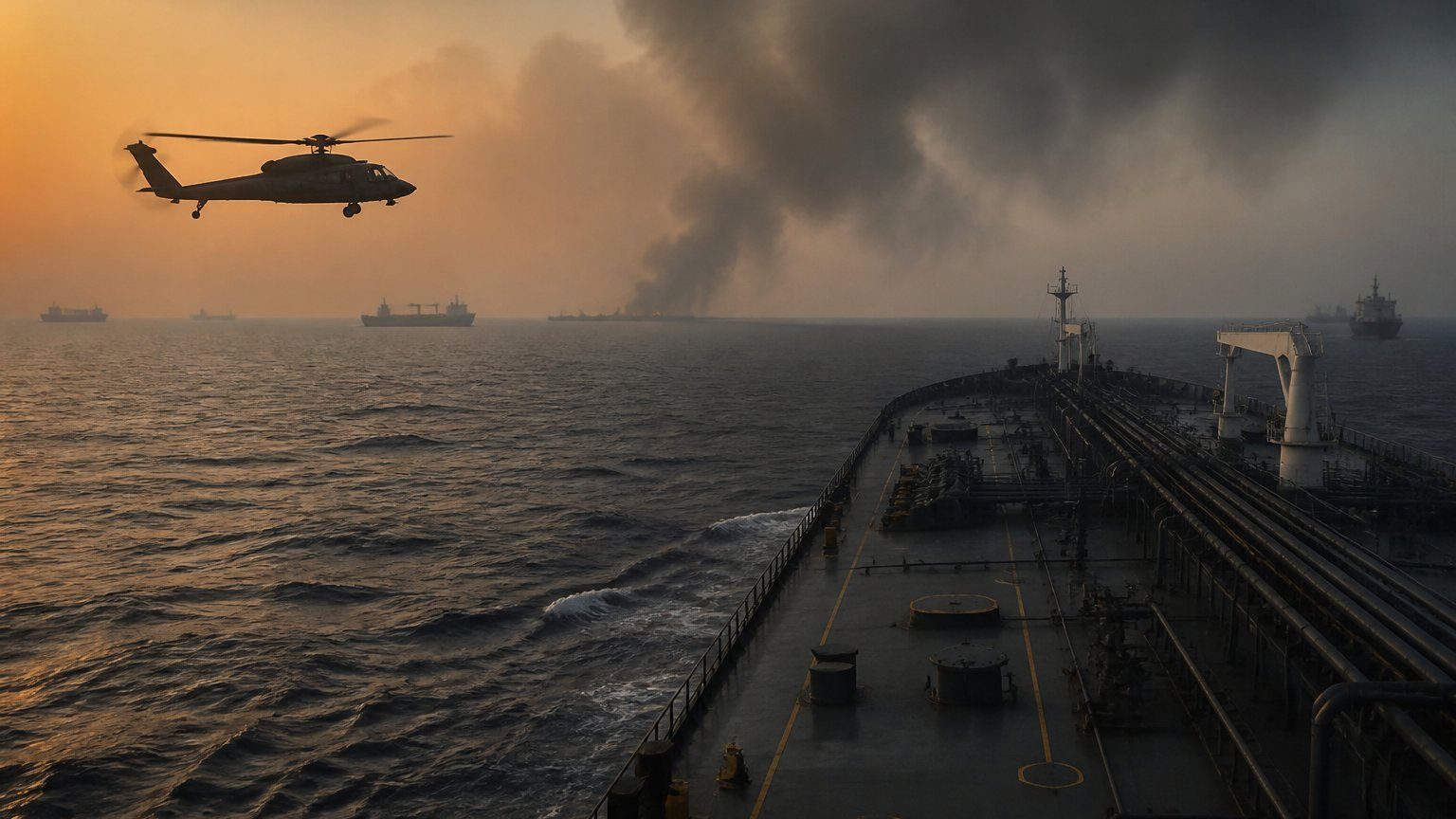
Oil tanker risk in the Middle East has reached its highest point since the Iran war began, as attacks spread to alternate shipping routes.
The oil tanker risk in the Middle East has reached its highest point since the Iran war began, according to shipping analysts who say attacks on alternative routes have made the situation more dangerous and more complicated for global trade. The warning centers on vessels carrying crude through the Strait of Hormuz and the Red Sea, two waterways that now face pressure at the same time.
The concern comes after a series of attacks on ships in the Red Sea, which had become a fallback route for some tankers after Iran blocked the Strait of Hormuz. Matthew Wright, an analyst at the ship-tracking firm Kpler, said the threat to crude trade is now at the worst level since the crisis started. Kpler said only eight ships passed through the Strait of Hormuz on Sunday and 11 on Saturday, far below the more than 100 a day seen before the war.
Before the conflict, roughly one-fifth of the world’s oil and gas moved through the strait. Traffic briefly improved after a temporary peace deal with the United States in early June, but renewed strikes between the two sides about a month later pushed volumes back down. Many ships have also been “going dark” in the strait, turning off their transponders to avoid being tracked.
The Red Sea route, which some Saudi oil tankers had used as an alternate lane between the kingdom and west Africa, is now also under strain. Yemen’s Houthi fighters, who are backed by Iran, announced a blockade on Saudi Arabia’s Red Sea ports on 20 July, and the UK Maritime Trade Operations agency has reported several attacks on ships over the past week. Wright said the industry is now dealing with a problem stacked on top of another problem, as the region’s risk picture widens.
“Oil tanker risk in the Middle East has reached its highest point since the Iran war began, as attacks spread to alternate shipping routes.”
Tim Wilkins, managing director of tanker trade body Intertanko, said shipping is facing a broadening, deteriorating and increasingly complex security situation. He said the high-risk area has expanded into Saudi Arabian waters and parts of the Red Sea, adding pressure to both market conditions and freedom of navigation. Kpler data showed 28 commodity vessels passed through the Bab el-Mandeb strait on Saturday, and six had transponders turned off, suggesting efforts to avoid detection.
Not every ship has stopped moving. Kpler said the Houthi threat is aimed only at Saudi shipping, and total traffic is still around half of pre-attack levels. But the flow of ships loading crude oil for export to Asia has dropped to about four a day, the lowest level since the war began. Hapag-Lloyd, the global shipping company, said some of its vessels were still using the Red Sea but would watch developments closely and change its network if conditions shift.
Even if the Strait of Hormuz reopens, shipping companies expect a slow return to normal. Hapag-Lloyd said ships could leave the region fairly quickly, but restoring ordinary cargo flows would likely take three to four months because services have been suspended and vessels redeployed elsewhere. Iran has said no deal is close that would reopen the strait to normal traffic, and its foreign ministry spokesman Esmaeil Baqaei said any agreement would not remove current restrictions while US aggression continues.
The stakes are high for Americans because oil disruption in this region can move energy prices and rattle global supply chains. Oil prices fell after Donald Trump said he would cancel planned strikes on Iran because of possible talks, but analysts said the shipping outlook remains unstable and far from settled.
Frequently asked questions
Why are shipping analysts worried now?
They say attacks on both the Strait Of Hormuz and the Red Sea have made oil transport riskier and less predictable.
How much traffic is still moving through the Strait of Hormuz?
Kpler said eight ships passed through on Sunday and 11 on Saturday, well below pre-war levels.
What is happening in the Red Sea?
Houthi fighters announced a blockade on Saudi Arabia’s Red Sea ports, and the UK Maritime Trade Operations agency has reported attacks on ships.
Could shipping return to normal quickly if the strait reopens?
Not likely. Hapag-Lloyd said normal cargo flows would most likely take three to four months to recover.
We value your privacy 🍪We use cookies for essential features and, if you allow it, to send you a notification whenever we publish a new story. See our Privacy Policy.
📨
Never Miss a Story
Get the headlines that matter delivered straight to your inbox.
📱 On iPhone: tap the Share icon, choose “Add to Home Screen”, then open TheTrueDefender from your Home Screen and tap 🔔 to turn on notifications. (Apple only allows notifications for saved web apps.)
🔔
Never miss a breaking storyGet free alerts the moment big US news breaks.
1Tap the ••• menu at the bottom of the screen, then tap Share(in Safari, just tap Share in the bottom bar directly)2Scroll down the menu and tap Add to Home Screen3Tap Add in the top-right corner4Open TheTrueDefender from your Home Screen, then tap 🔔 Subscribe and choose Allow
📱 Add TheTrueDefender to your home screen for one-tap access.