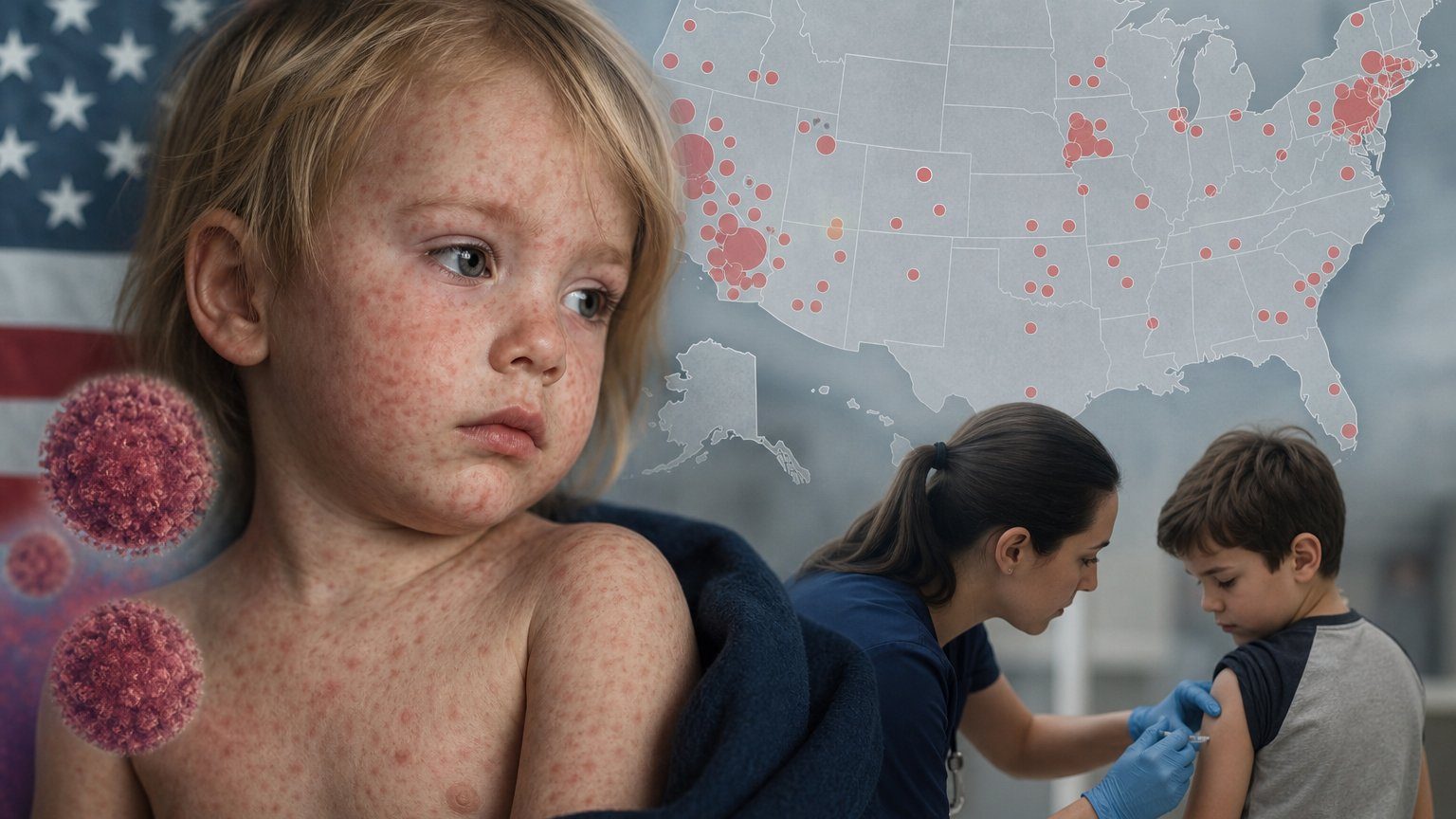
US measles cases have reached a 35-year high, with 2,318 confirmed infections in 2026 and public health officials warning of more outbreaks ahead.
US measles cases have reached a 35-year high, according to new figures from the US Centers for Disease Control and Prevention. The latest count stands at 2,318 confirmed infections in 2026, and that total was reached with five months still left in the year.
The US measles cases tally has already surpassed last year’s high of 2,289, when two unvaccinated children died from the disease. Health officials say the increase has come alongside rising vaccine hesitancy in recent years, which has helped push immunisation rates lower in some communities.
The numbers carry added weight because measles is one of the most contagious viruses known to medicine. Before a vaccine was developed, it infected millions of children each year. The illness can be fatal, and doctors warn it can also leave lasting harm, including encephalitis and immune amnesia, a condition that weakens the body’s ability to respond to new infections.
The public health stakes are even higher because the United States could soon face a formal setback on measles elimination status. A panel is scheduled to decide in November whether the country will lose that designation, which Canada lost last year. A country loses elimination status after a year or more of continuous transmission of the same strain of the virus.
“US measles cases have reached a 35-year high, with 2,318 confirmed infections in 2026 and public health officials warning of more outbreaks ahead.”
The outbreak pattern shows how far the problem has spread. Over the past 18 months, the United States has recorded more measles cases than it had in the previous 25 years combined. That is a stark sign that the disease is no longer an isolated concern, but a wider national challenge tied to vaccination gaps.
Recent outbreaks have continued to surface in multiple states. Virginia and Pennsylvania have both dealt with new measles outbreaks over the past month, while Utah is still responding to a cluster that began last year. In Texas last year, an outbreak among the Mennonite community killed two unvaccinated children. An unvaccinated adult in neighboring New Mexico also died.
Much of the debate has now turned to Health Secretary Robert F. Kennedy Jr., who has drawn criticism from public health experts for remarks and policy changes they say have made outbreak control harder. Kennedy, a longtime vaccine skeptic, has sent mixed signals on the MMR vaccine. He has said the shot is the most effective way to stop measles from spreading, while also promoting unproven treatments.
The federal government’s own guidance still says the MMR vaccine is the best protection, and officials recommend two doses for children between the ages of one and six. The shots are described as 97% effective. At the same time, a federal judge earlier this year blocked a set of sweeping changes to childhood immunisations under Kennedy’s leadership, including a move to cut the number of recommended shots for children from 17 to 11. For American families, the message is plain: falling vaccination rates are giving measles room to come back, and the next few months will show whether the country can contain the damage or lose more ground.
Frequently asked questions
How many measles cases have been confirmed in the US this year?
The CDC’s latest count is 2,318 confirmed infections in 2026. That total was reached with five months still left in the year.
Why are measles cases rising in the US?
Health officials say rising vaccine hesitancy in recent years has helped push immunisation rates lower in some communities. The article says those vaccination gaps are giving measles room to come back.
What serious effects can measles cause?
Doctors warn measles can be fatal. It can also leave lasting harm, including encephalitis and immune amnesia, which weakens the body’s ability to respond to new infections.
Could the US lose its measles elimination status?
Yes. A panel is scheduled to decide in November whether the country will lose that designation. A country loses elimination status after a year or more of continuous transmission of the same strain of the virus.
We value your privacy 🍪We use cookies for essential features and, if you allow it, to send you a notification whenever we publish a new story. See our Privacy Policy.
📨
Never Miss a Story
Get the headlines that matter delivered straight to your inbox.
📱 On iPhone: tap the Share icon, choose “Add to Home Screen”, then open TheTrueDefender from your Home Screen and tap 🔔 to turn on notifications. (Apple only allows notifications for saved web apps.)
📱 Add TheTrueDefender to your home screen for one-tap access.