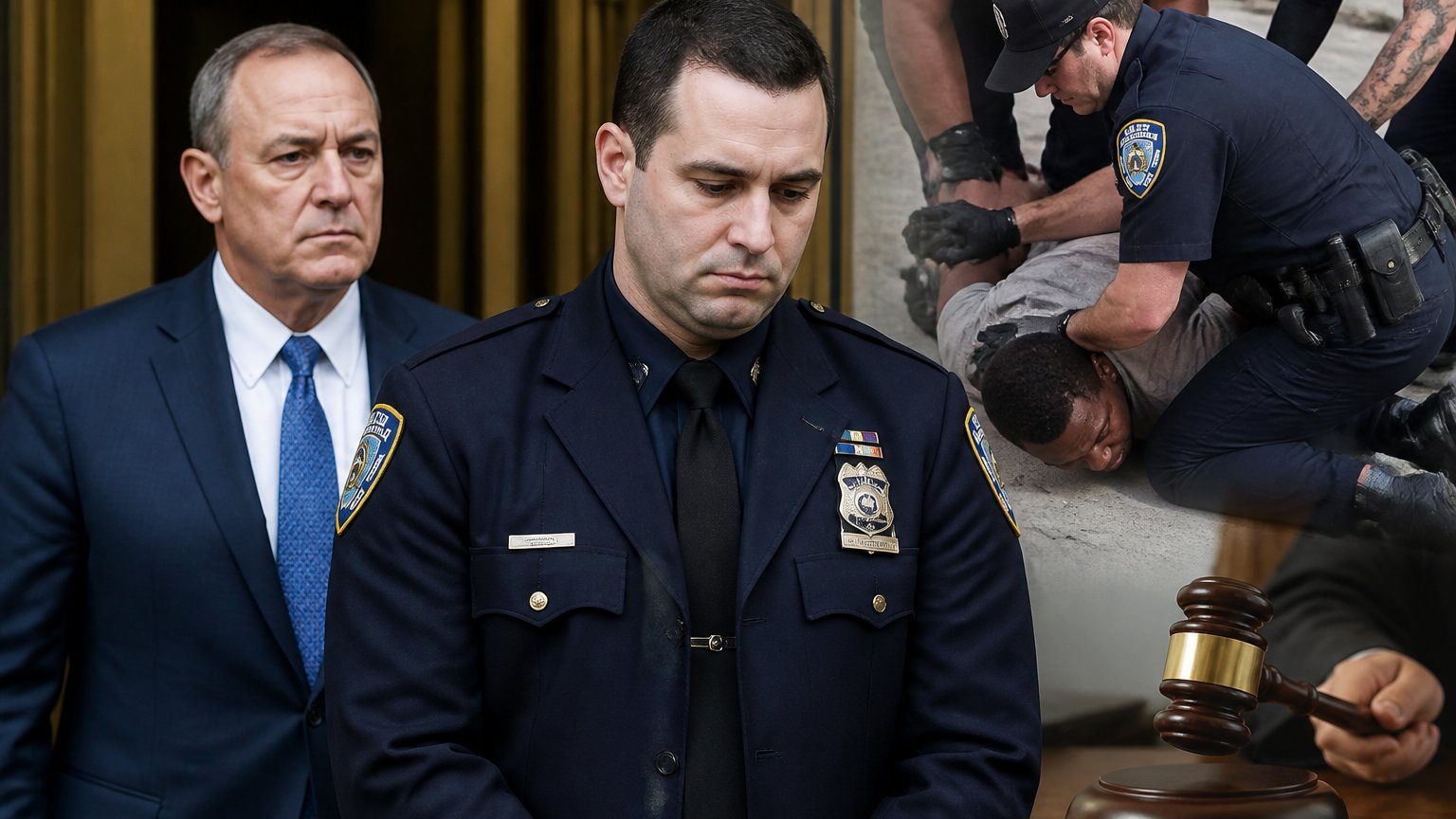
An NYPD cop convicted in a chokehold case in the Bronx has become the first city officer found guilty under New York’s post-George Floyd ban on police chokeholds, prosecutors said Thursday. Officer Omar Habib was convicted of strangulation and using a prohibited restraint after a 2023 arrest left a man unconscious, marking a major test of the city rule that was put in place after George Floyd’s death in Minneapolis in 2020.
Habib, who joined the department in 2007 and was assigned to the 47th Precinct, was found guilty of second-degree strangulation, third-degree assault and unlawful methods of restraint, according to the Bronx District Attorney’s Office. Prosecutors said the strangulation count is a violent felony that could bring a prison term of up to seven years. The unlawful-restraint charge is a misdemeanor under New York City Statute 10-181, which makes chokehold use by police officers illegal.
According to prosecutors, Habib and other officers were trying to arrest Lord Nymaah after a fight at an Eastchester Road catering hall party. Assistant District Attorney Michael Naughton said at trial, as reported by Gothamist, that Nymaah punched bathroom mirrors and was drunk and disorderly before refusing arrest. Prosecutors said Habib wrapped his arms around Nymaah’s neck so tightly that it interfered with his breathing and circulation, causing a temporary loss of consciousness.
The defense pushed back on that account. Habib’s attorney, Jacob Weinstein, argued that the evidence did not show Nymaah lost consciousness because of Habib’s actions, according to Gothamist. Weinstein also said that if the court accepted the prosecution’s version, Habib did not intend that result and “did exactly what he should have done” during what the defense described as a tense encounter.
The case has drawn attention because it is the first NYPD conviction tied to the city’s chokehold ban. That rule became part of the wider police reform push after Floyd’s killing in 2020, when lawmakers and city officials came under pressure to curb restraints seen as especially dangerous. In New York City, the law was meant to draw a bright line for officers on tactics that can cut off air or blood flow and turn an arrest into a medical emergency.