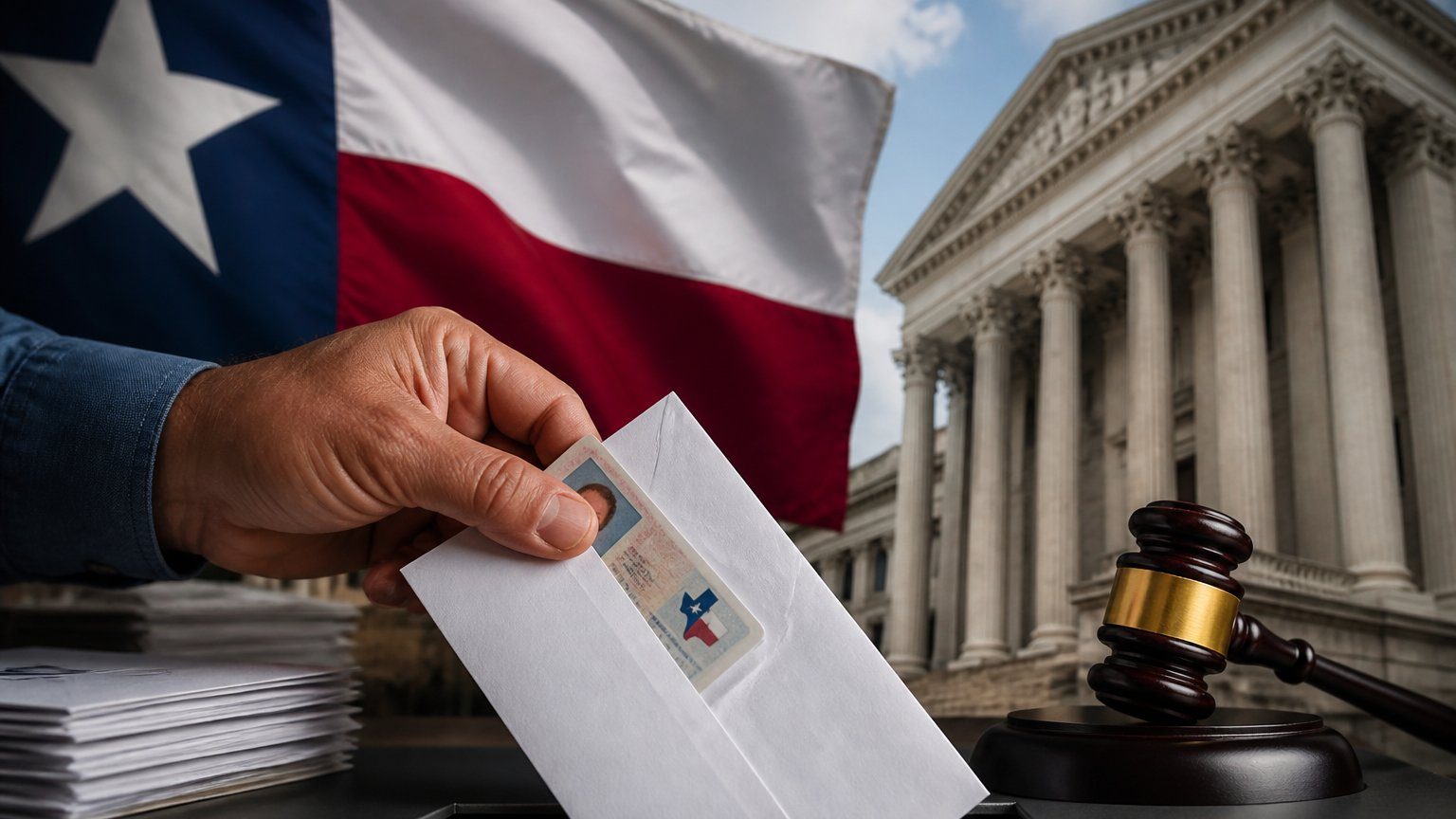
A federal appeals court has restored Texas mail ballot ID rules, handing state officials a significant win in the long-running battle over Senate Bill 1. The 5th U.S. Circuit Court of Appeals issued its ruling Wednesday, reversing a lower court order that had blocked nine parts of the 2021 election law.
The decision brings back requirements that Texans voting by mail provide an identification number or Social Security number on ballot applications, with that information matching state records. It also reinstates a process for fixing defective ballots and a rule requiring voters and anyone helping them complete ballots to sign an oath saying they did not coerce the voter. In the opinion, Judge Andrew Oldham wrote that the plaintiffs’ claims largely failed because they lacked standing, while one claim failed on the merits. He added that none of the arguments justified interfering with what he described as the Texas Legislature’s effort to prevent voter fraud and protect election integrity.
The ruling marks another turn in a case that has moved through federal courts for roughly five years. The appeals court said it has “reversed the district court on everything” during that period, underscoring how often the lower court’s earlier rulings have been undone. A district judge had blocked the rules in March 2025 after several lawsuits were combined into one challenge centered on accessibility concerns. The plaintiffs argued the requirements made voting harder for some people with disabilities and violated the Americans with Disabilities Act.
Texas law allows several groups to vote by mail, including voters who are 65 or older and voters who qualify because of a disability. Senate Bill 1, passed in 2021 after a bitter fight over election rules, became a flashpoint in Texas politics and drew strong opposition from Democratic lawmakers, civil rights organizations and voting-rights groups. Texas House Democrats even broke quorum in an unsuccessful effort to stop the measure. The law also targeted voting initiatives Harris County used during the COVID-19 pandemic, adding to the clash over how far local election officials could go in expanding access.