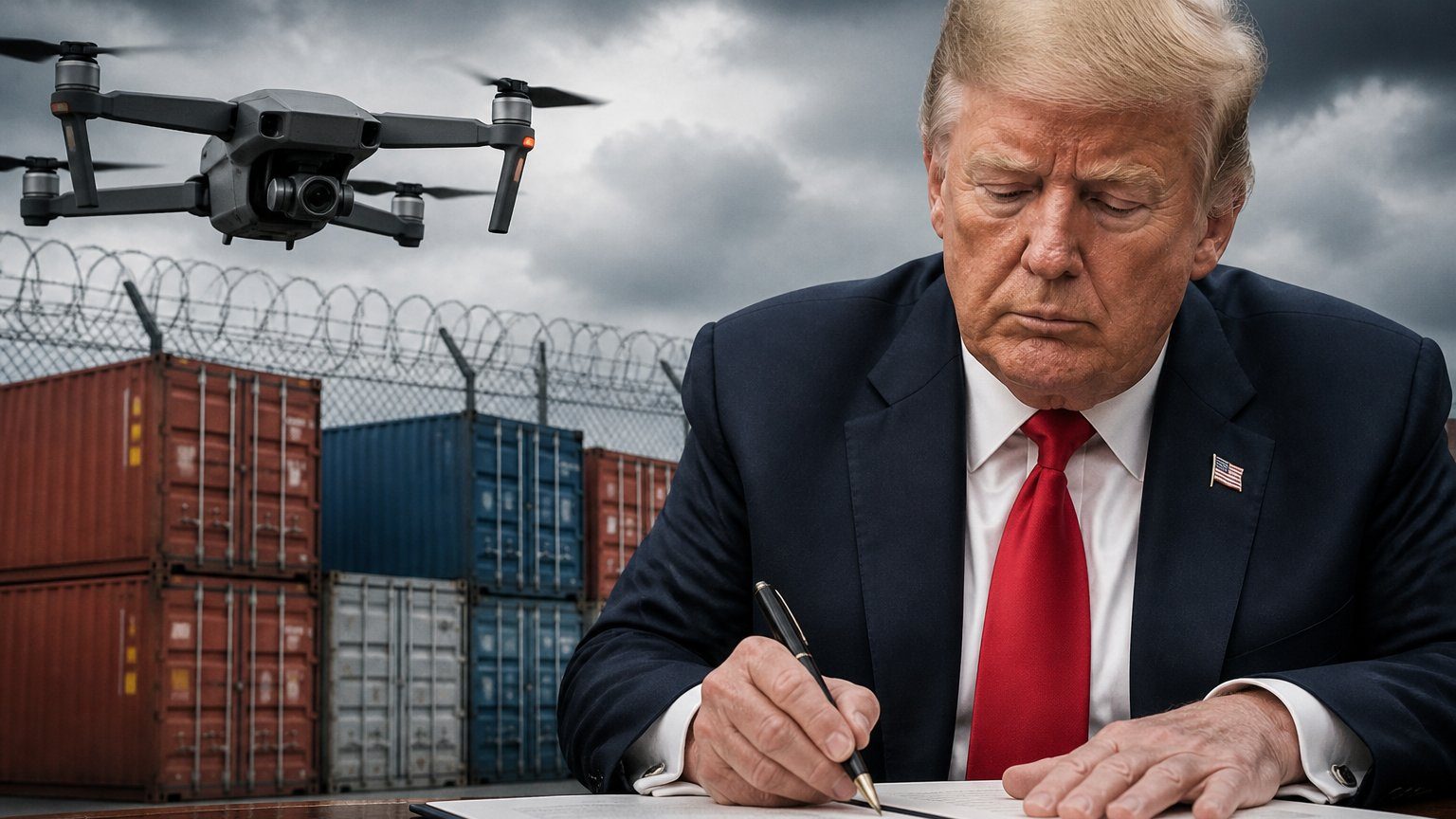
President Trump has ordered a new drone tariff that will hit some imported unmanned aircraft with duties as high as 100%, part of a White House push to strengthen domestic production and reduce what officials describe as national security risks. The move targets certain drones, along with key equipment tied to them, and it is set to take effect in stages over the coming months.
Under the proclamation signed Thursday, the 100% drone tariff applies to drones of a certain size or with certain capabilities that the White House says are especially sensitive for national security. That includes drones with a maximum takeoff weight of more than 55 pounds and drones equipped with thermal imaging capabilities. Docking stations and critical components for those drones are also included in the 100% levy. Trump also set a 15% tariff on drones and components from the European Union, Japan, Liechtenstein, South Korea, Switzerland and Taiwan, and a 10% fee on drones imported from the United Kingdom.
The president said Commerce Secretary Howard Lutnick was directed to review how drone imports and parts affect national security. After receiving Lutnick’s report, Trump said he acted on the findings. In the proclamation, Trump wrote that foreign producers already have a substantial share of the market and that the United States is too dependent on outside sources for drones and their components. He said that dependence creates risks tied to unreliable supply chains, cybersecurity weaknesses and foreign entities that can pose security and safety concerns.
Trump also argued that the United States does not produce enough drones and drone parts to meet national security needs safely and that demand for domestic production will keep rising. He said his administration is worried about whether American industry can make drones fast enough and in enough volume to support military and other national security missions, including during wartime or an armed conflict. The proclamation also ties the tariff decision to what Trump called unfair trade practices that discourage U.S. companies from investing more in drone manufacturing.