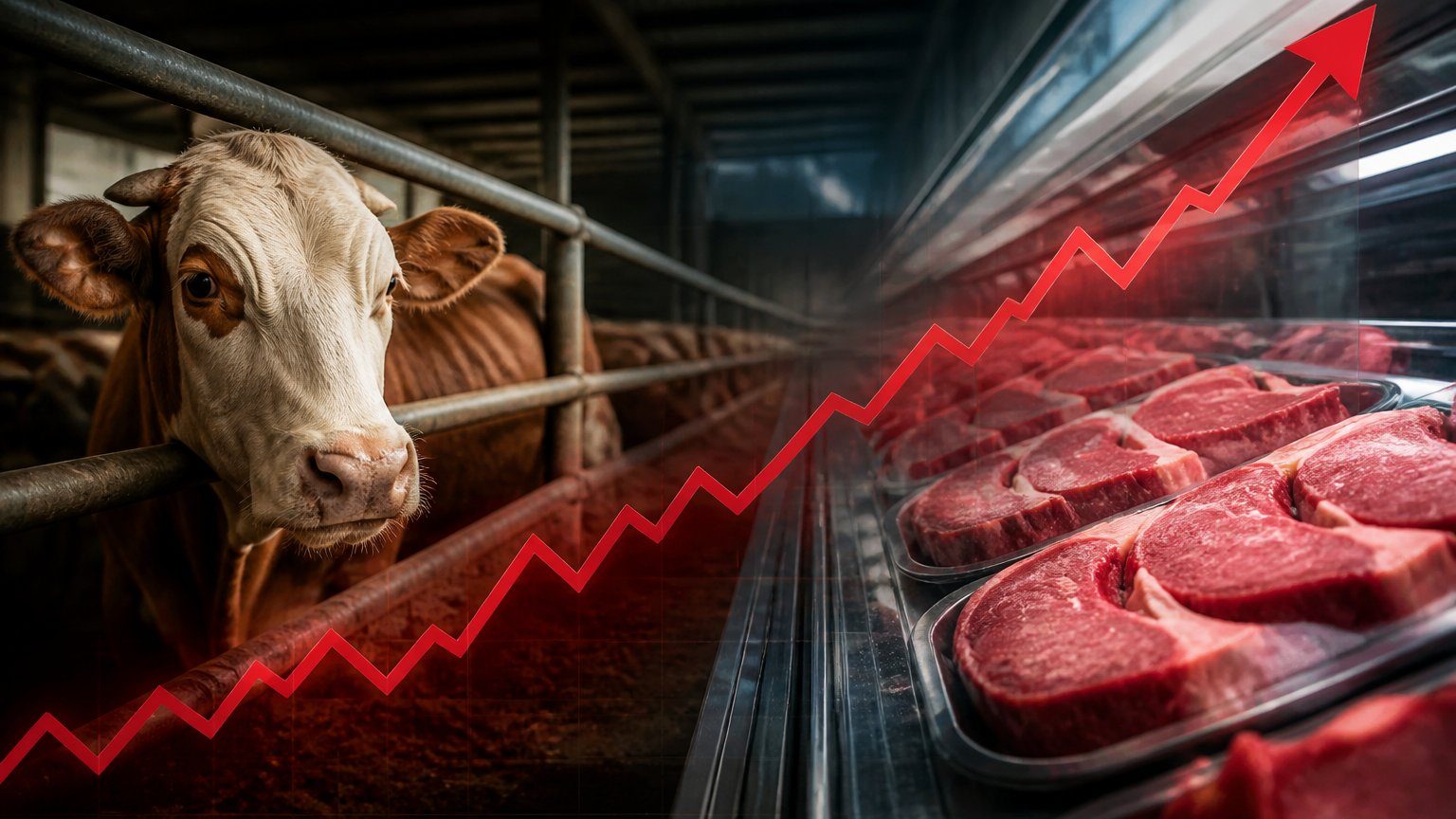
US beef prices have reached record highs, but ranchers, feedlots and packers say the shortage is raising costs without boosting profits.
US beef prices have climbed to record highs, and the surge is rippling through the American beef market from ranches to restaurants. What looks like a windfall for cattle country is turning out to be a squeeze, with producers and processors saying the higher prices are not translating into bigger profits.
At the center of the story is South Dakota rancher Eric Gropper, who raises about 350 breeding cows across roughly 8,000 acres of grassland in southwest South Dakota. He leases most of that land from the Pine Ridge Indian Reservation and lives in a remote area far from paved roads and the nearest town of any size. When his calves go to auction once a year, buyers decide the price. Right now, he says, the bids are the highest he has ever seen, around $2,500 for a 600-pound calf, up from $2,000 two years ago.
The reason is simple: there are not enough cattle. Drought in many states and disease pressure have left the United States with fewer cattle than at any point since 1951. Gropper is seeing the effects up close. The 13 natural wells on his land have run dry, forcing him to use a water tanker. He says his own costs have climbed just as sharply as the price of his calves, with equipment, fencing materials and everyday supplies all getting more expensive since the pandemic.
He also has to buy more hay, silage and other feed because more than 60% of US cattle are now grazing on drought-hit land. Gropper says he can cover his bills, but the numbers do not amount to a true profit boom. The cattle market is giving ranchers record sale prices, yet the higher costs are absorbing much of the gain.
“US beef prices have reached record highs, but ranchers, feedlots and packers say the shortage is raising costs without boosting profits.”
The same pattern shows up deeper in the beef supply chain. After calves are sold at around six months old, they usually go to feedlots, where they are fattened on corn and other grains for three to six months. Around 95% of US cattle are finished that way. Brenda Boetel, an agricultural economics professor at the University of Wisconsin–River Falls, says feedlot operators are selling cattle at record prices, but they are buying them at all-time highs too. That leaves them with little or no extra profit.
The largest pressure point is processing. Four companies — Tyson, JBS, Cargill and National Beef — control about 85% of American beef processing, a concentration that has fueled accusations of price-fixing, including from President Trump. Tyson, the biggest of the four, reported in May that it had lost more than $500 million on beef in the first half of its financial year. Smaller packers face the same squeeze. Jamie Crumley, who owns Harpley's Meatpacking in central North Carolina, says the price of live animals has risen by as much as 60% over three years, while her plant is running below capacity because it cannot get enough cattle. That means fixed expenses are spread over fewer head, and losses can pile up quickly.
Even at the retail end, the market has limits. Restaurants, supermarkets and shoppers can turn to chicken or cheaper imported beef if prices go too far. Paul and Jessica Urban, who own Block 16 in Omaha, Nebraska, say they sell about 2,800 burgers a month and would need to charge more to protect margins, but they do not want to push prices that high. Their example shows how the pressure eventually reaches consumers, even when businesses try to hold the line.
The broader lesson is that America’s beef market is flooded with higher prices but short on extra earnings. Every stage is moving more money, but not keeping much of it. The shortage will not ease quickly, either. A heifer needs two years before she can produce a calf, and that calf needs another year to reach slaughter weight. For American shoppers, that means beef prices are likely to stay a pain point until the herd rebuilds and more cattle reach market.
Frequently asked questions
Why are US beef prices so high right now?
The main reason is a cattle shortage. Drought and disease pressure have left the country with fewer cattle than at any point since 1951.
Are ranchers making bigger profits from the price surge?
Not necessarily. Ranchers like Eric Gropper say higher cattle prices are being offset by sharply higher costs for water, feed and supplies.
Which companies control most beef processing in the US?
Tyson, JBS, Cargill and National Beef control about 85% of American beef processing.
How long could the tight supply last?
Not quickly. A heifer needs two years before she can produce a calf, and that calf needs another year to reach slaughter weight.
We value your privacy 🍪We use cookies for essential features and, if you allow it, to send you a notification whenever we publish a new story. See our Privacy Policy.
📨
Never Miss a Story
Get the headlines that matter delivered straight to your inbox.
📱 On iPhone: tap the Share icon, choose “Add to Home Screen”, then open TheTrueDefender from your Home Screen and tap 🔔 to turn on notifications. (Apple only allows notifications for saved web apps.)
🔔
Never miss a breaking storyGet free alerts the moment big US news breaks.
1Tap the ••• menu at the bottom of the screen, then tap Share(in Safari, just tap Share in the bottom bar directly)2Scroll down the menu and tap Add to Home Screen3Tap Add in the top-right corner4Open TheTrueDefender from your Home Screen, then tap 🔔 Subscribe and choose Allow
📱 Add TheTrueDefender to your home screen for one-tap access.